Crop Stories - Your Quick Guide to Collards by Mark Farnham
Your Quick Guide to Collards
bY Mark Farnham
ILLUSTRATIONS BY KRISTIN EGGEN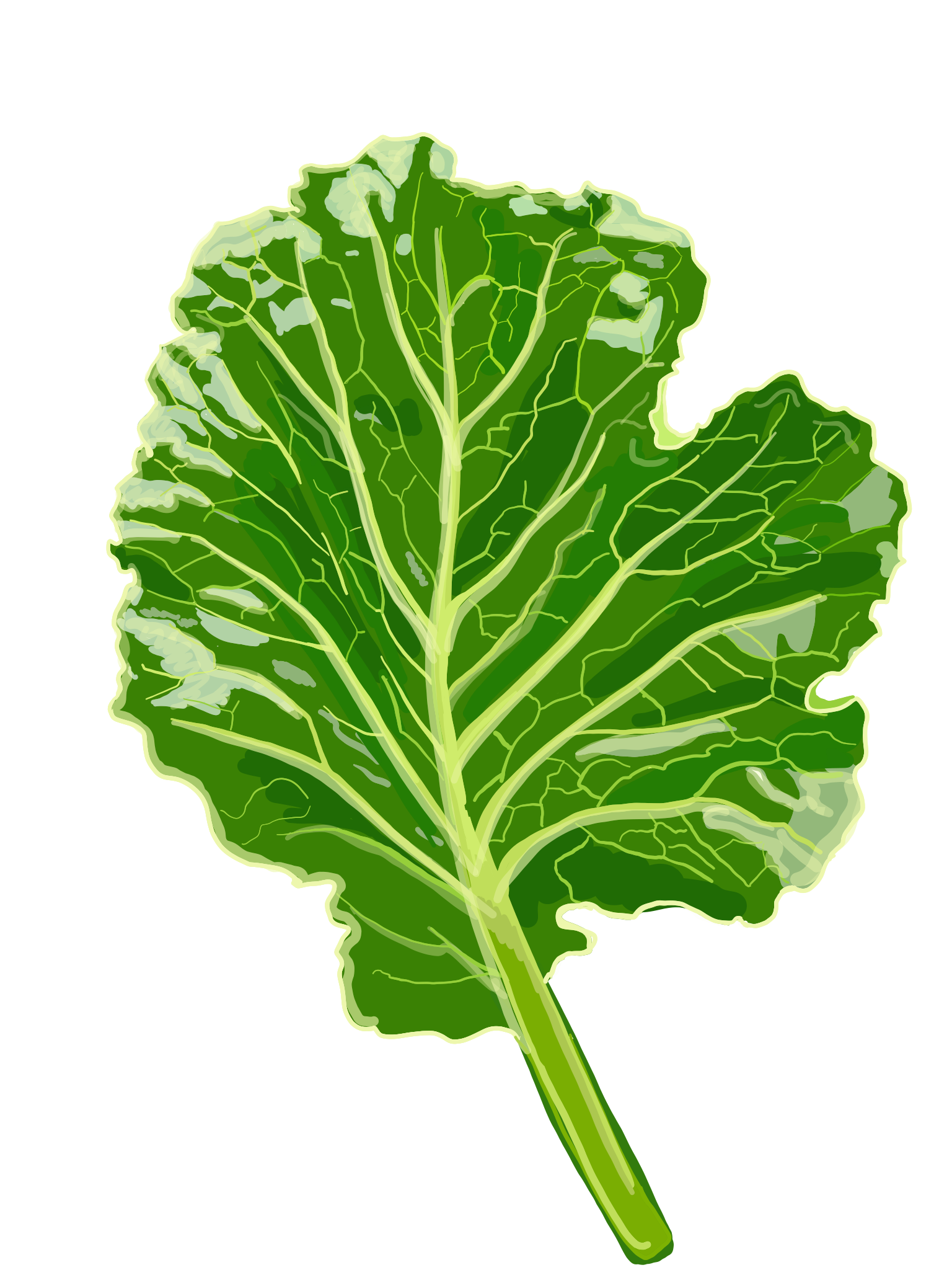
Southern greens, according to the USDA, include collards,
kale, mustard greens and turnip greens. In their book, Collards,
A Southern Tradition from Seed to Table, Ed Davis (also featured
in this publication) and John Morgan support this definition,
reporting that collards, along with mustard and turnip greens,
are the top three traditionally cooked greens in the region.
Within each of those crops, there is a huge amount of
diversity, but that diversity remains largely unknown and
underappreciated beyond specialty farmers and seed
saving circles. The commercial collard crop is represented by
just a few cultivars, and there is very little variation among
them. Typical “supermarket” collards are described as
bunching collards because when they are harvested, single plants
are cut whole and tied together in bunches. Their leaves can
vary in color from deep green to blue green, but are generally
smooth, large and oval shaped, with prominent petioles (the
stalk that joins the leaf to the stem). The most widely grown
cultivar is called “Top Bunch,” and it produces a plant with
mostly upright leaves that bunch well when harvested.
Beyond the commercial collard, there is substantial variation
among heirloom collards that have been grown and
perpetuated by numerous farmers and gardeners in
Southeastern states (learn more about these varieties at
heirloomcollards.org). These heirloom collards are often
classified or labeled by the seed savers who maintain them with
names that describe their general type. The groupings
primarily focus on plant habits, leaf characteristics and other
observable traits. On the following pages is a list
of the more common descriptions or classifications for collards:
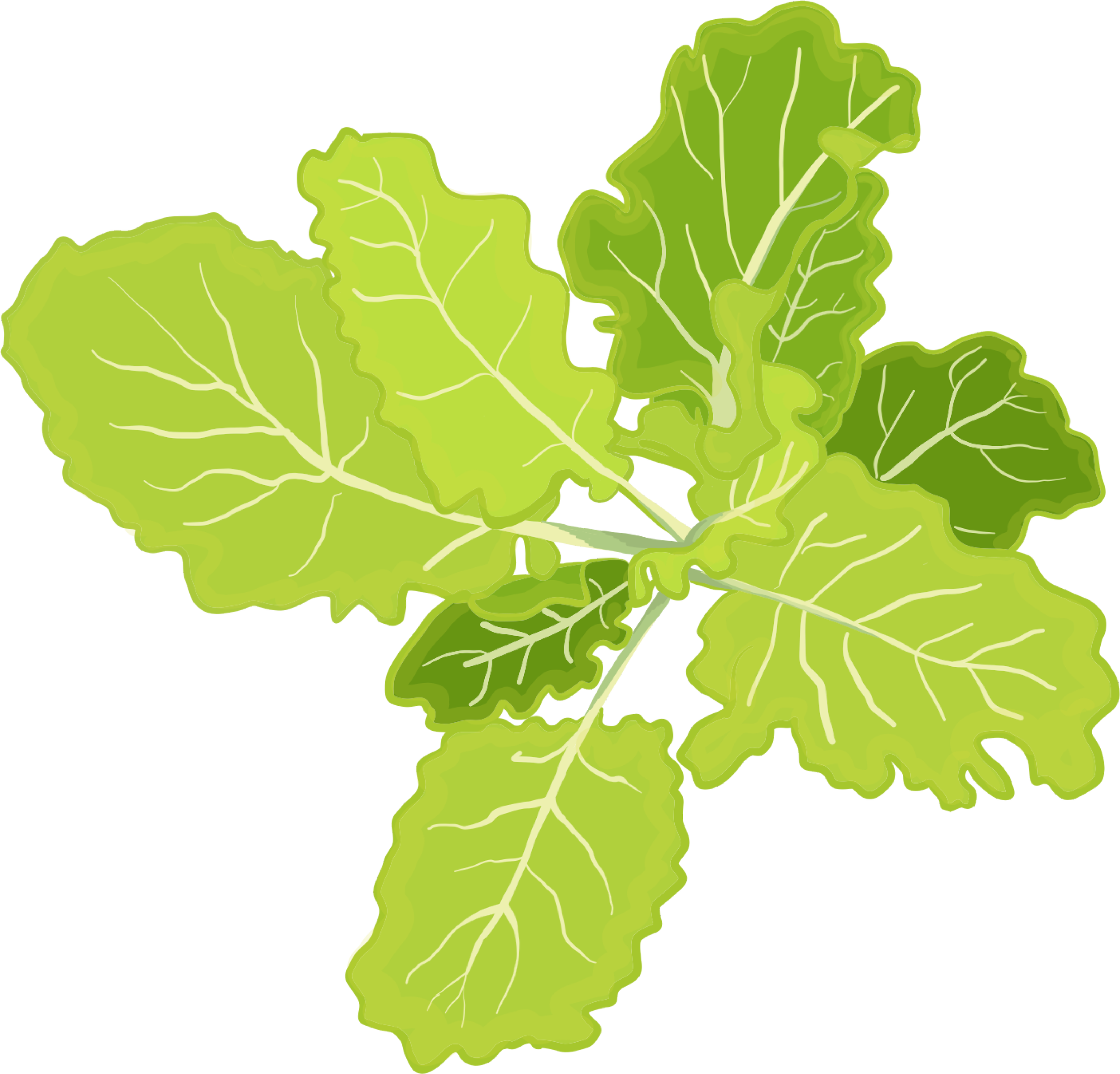
Yellow Cabbage Collards
Cabbage collards
One of the most common labels seed savers,
mostly in the Carolinas, give to their heirlooms is “cabbage collard.”
This collard type typically doesn’t form a cabbage-like “head” for
much of its life, but may form a loose central head if it is left to
grow for an extended season. The leaves are typically large with
significant petioles. A large number of cabbage collard heirlooms
have a lighter yellow green color.
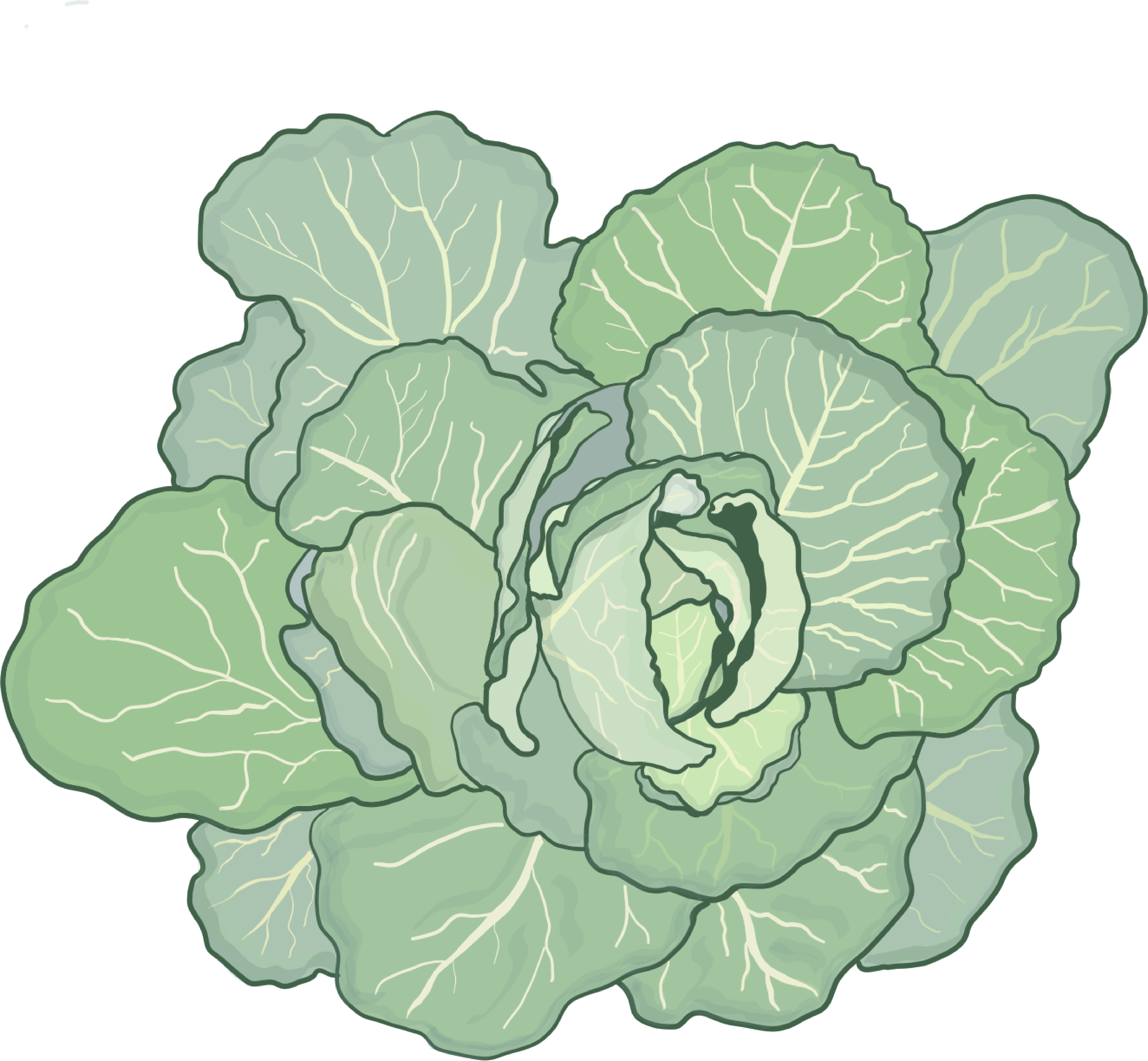
William Alexander Heading Collards
Heading collards
A few heirlooms are collard-like in their early
growth stages but begin to form a leafy structure akin to a small,
loose cabbagehead as the plants mature. The heads of these
heirlooms occur due to very shortened petioles, or even a near lack
of petioles, that causes developing leaves to curl into a heading
structure.
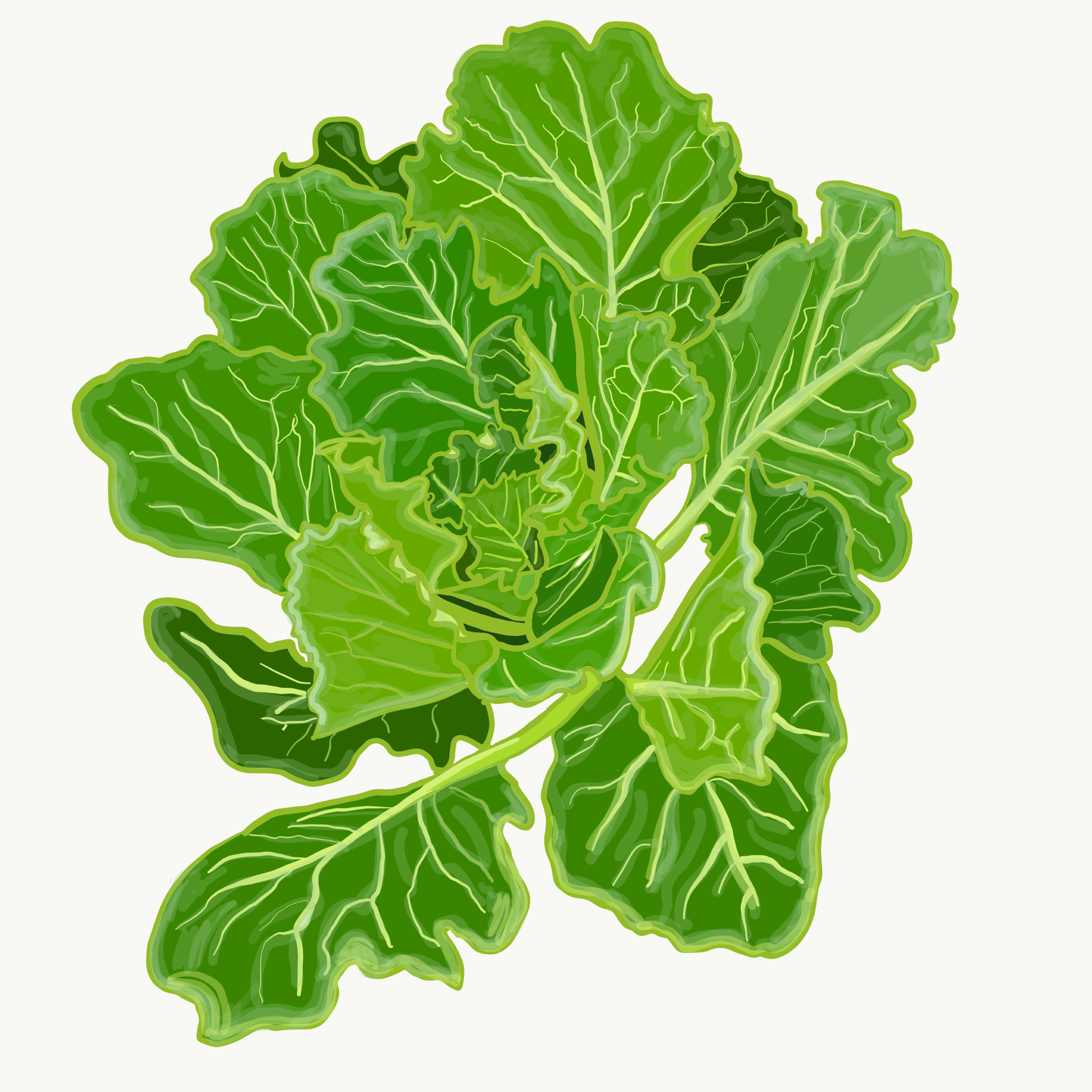
Green Glaze
Glossy or Glazed collards
Some heirlooms exhibit a shiny leaf
appearance. Glossy characteristics occur due to gene mutations
that control waxes that cover leaves. In general, a “glossy” leaf
usually exhibits less wax on its surface than normal leaves, and this
results in the glazed appearance.
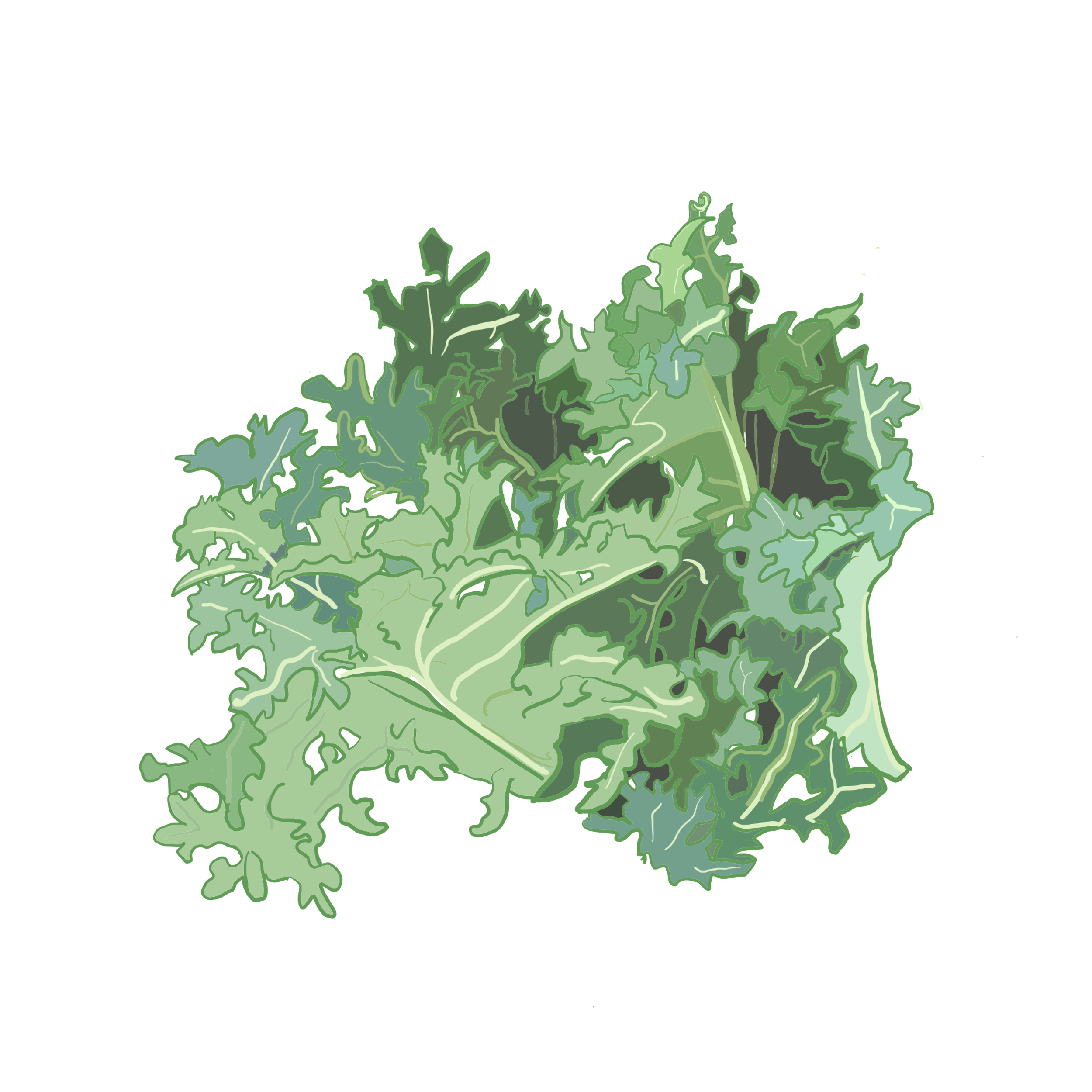
Crinkle Leaf
Curly-leafed collards
Some seed savers have maintained collard
heirlooms that have highly serrated leaves much different than
most collards, and these are often described as “curly-leafed.” The
degree of serration can be subtle or particularly pronounced in
varieties that more resemble kale than collards.
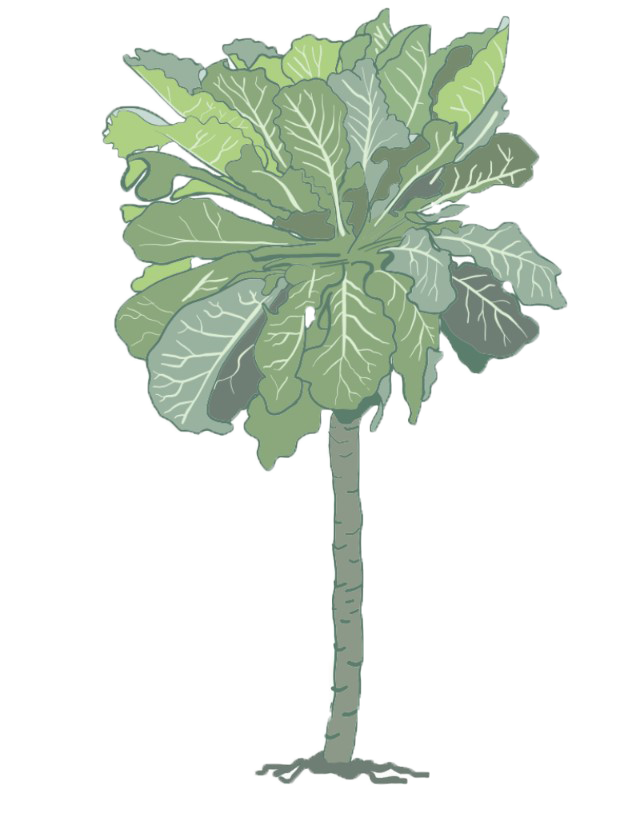
Merritt Tree Collard
Tree or perennial collards
Several heirlooms grow much taller
than typical collards, obtaining a small tree-like structure over a
long growing season (or at least taller than an average person!).
These collards can also survive multiple seasons in mild climates.
Unlike most collard types, these heirlooms have stems that
elongate more than normal, leading to their taller nature.
For more information on these unique plants, visit
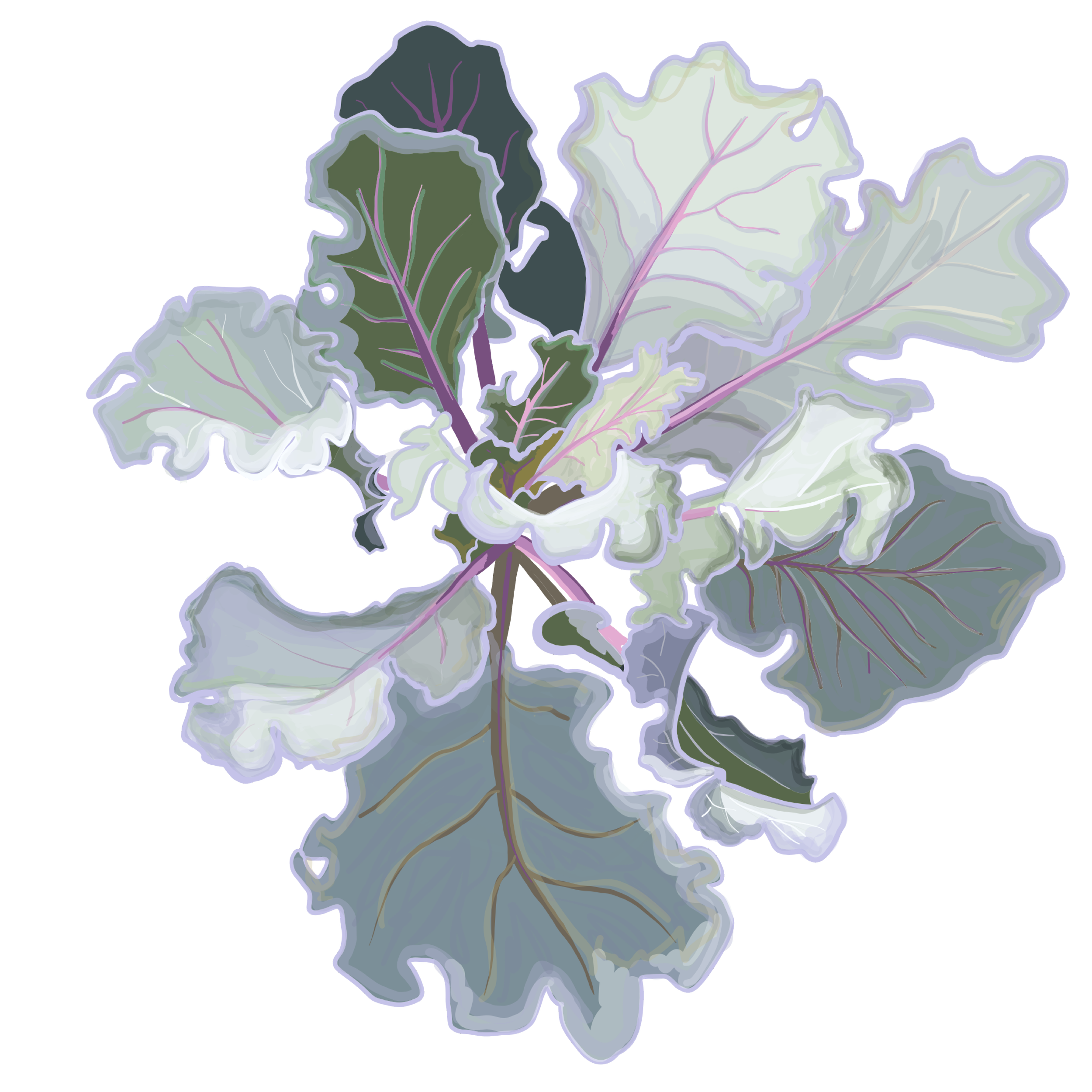
Old Timey Blue
Collards described by their color variation:
Color variation can occur in any of the above types that are described.
Most color variations range from yellow green to green to blue green.
Heirlooms that have a leaf hue that falls outside that spectrum are
rarer and more atypical. When these atypical colors (e.g., purple
or red) are exhibited, seed savers often incorporate the color into
the name of their collard. Colors can also exhibit in the petiole, the
leaf veins and the leaf itself.
