Making Ube Flour
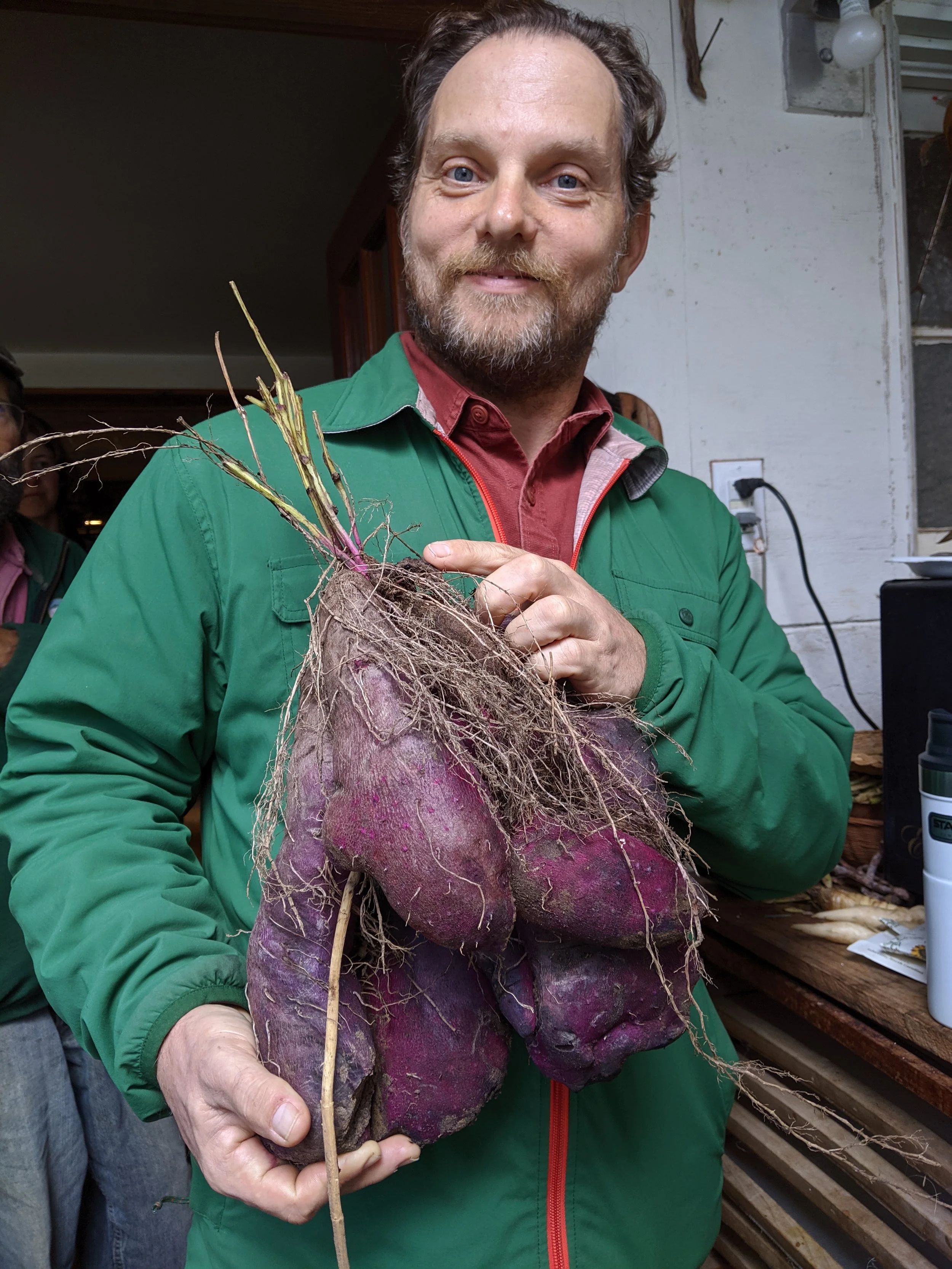
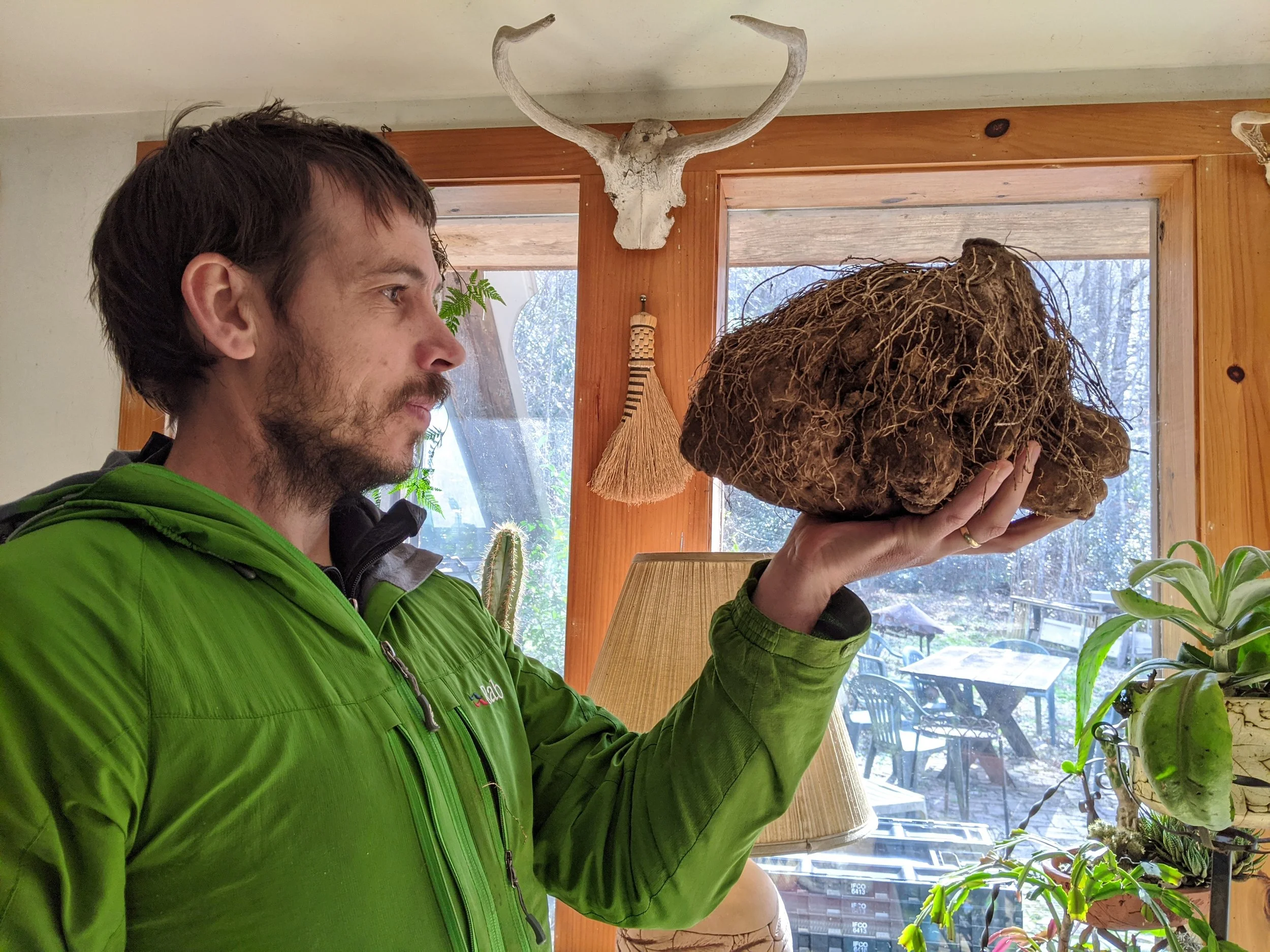
Ube (Diascorea alata) is one of the tropical root crops that we grow in Western North Carolina. We often talk about Ube as a ‘true yam’ to counter some of the confusion about sweet potatoes being called yams! Ube is known for its purple flesh. We notice a wide range from deep purple through to pale flesh with purple tints, although the skin of ube is always purple in our experience. There is another yam of the same species, which is a yellow-fleshed yam with paler skin.
Dioscorea alata: Jamie Swofford holding ube (purple yam) on the left; Chris Smith holding the yellow yam on the right.
We harvest our yams in the fall along with many of the other tropical root crops. After an initial drying stage to cure them, the yams store well in root-cellar style conditions throughout the winter. On a small scale, you can consume them one by one, but at Utopian Seed Project, we often do a mass processing.
Note: We are aiming to preserve the growing tip of the yam for propagation of more plants (a different post!), and then eat the rest as food.
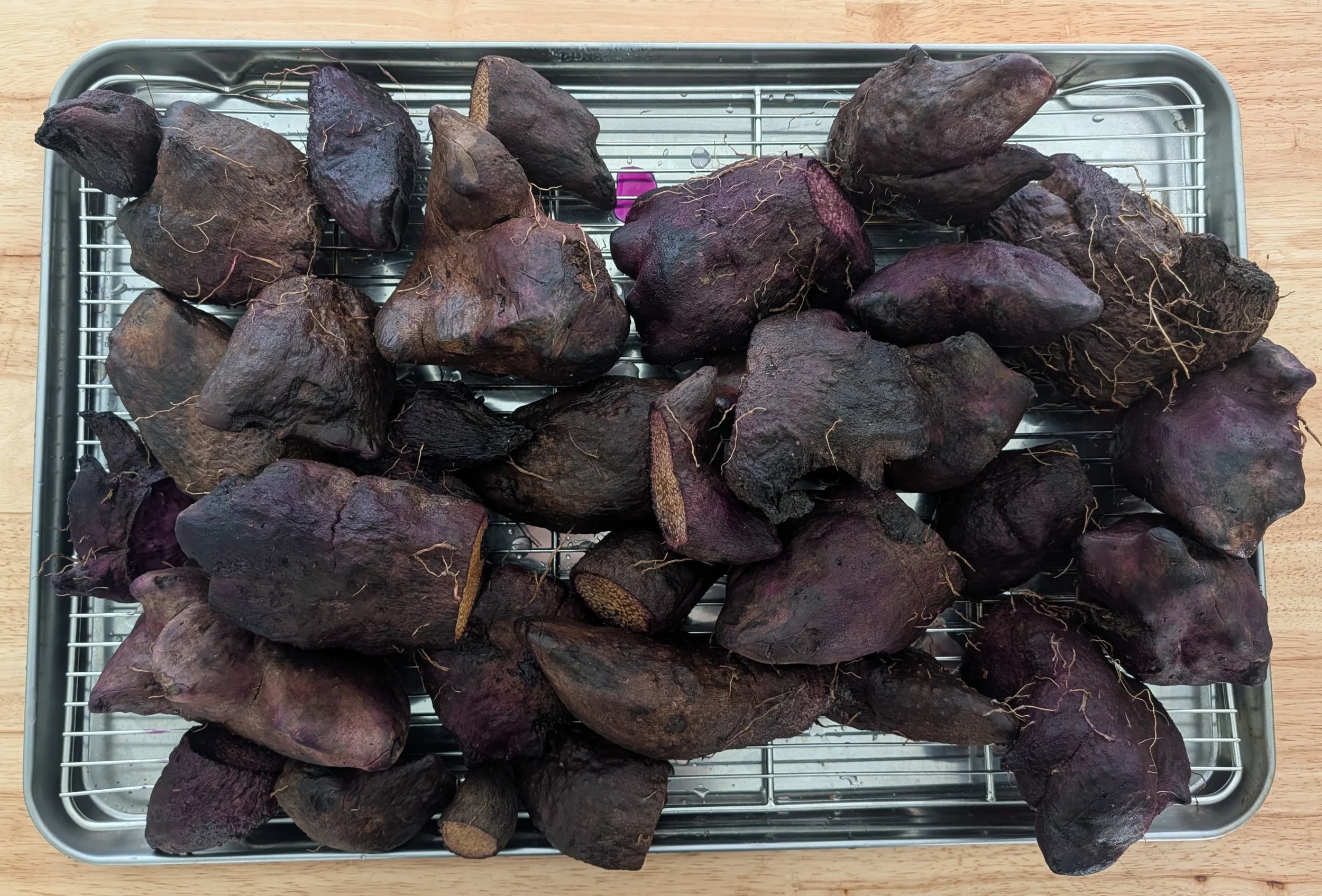
When we are faced with lots and lots of yam (or actually any root), processing for flour is a great way to reduce the volume and increase the storage life of the harvest. Below you can see the harvested ube, lightly scrubbed to remove soil, and all the growing tops sliced off.
To make root flour the process is quite simple:
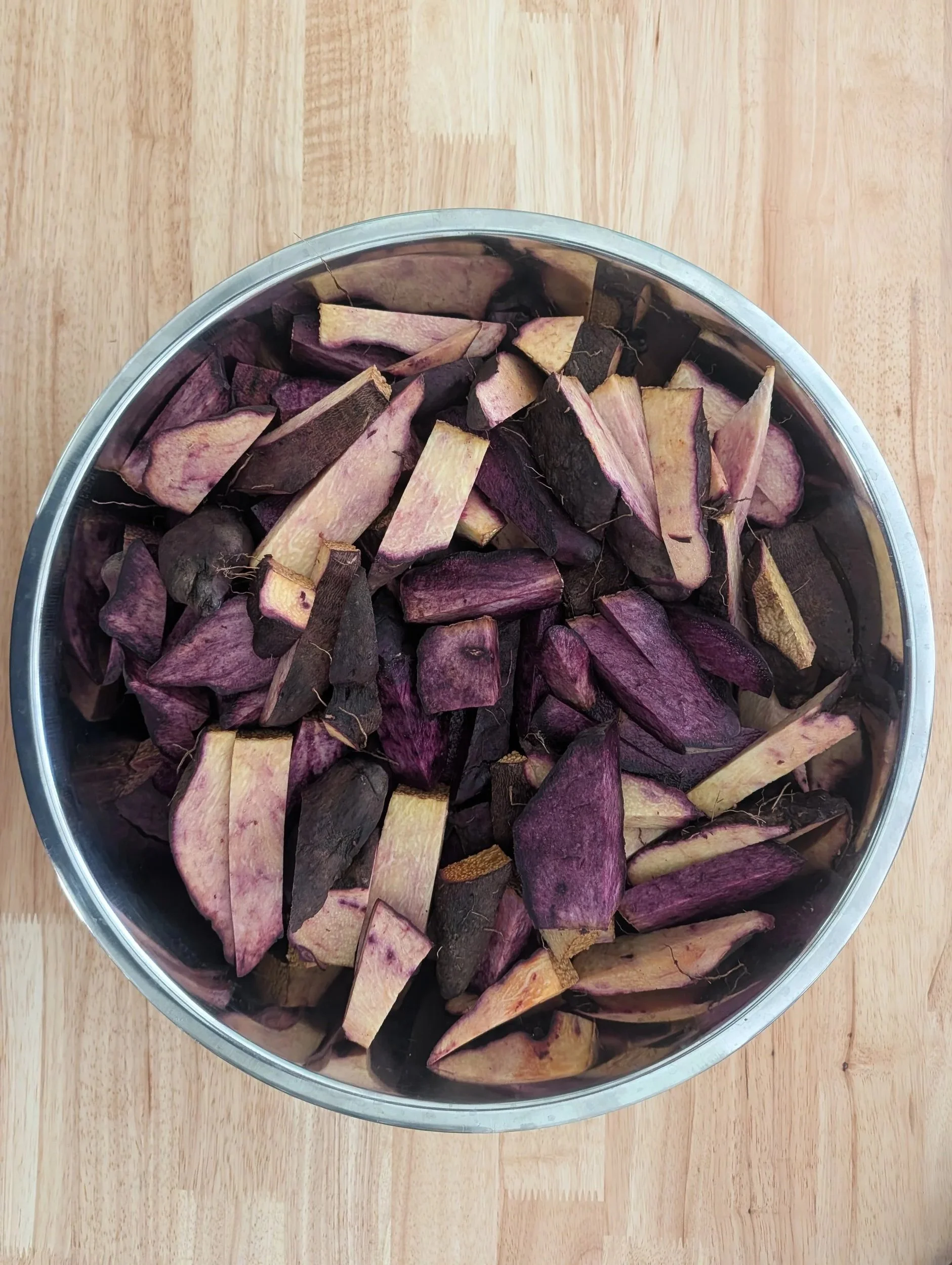
Slice the ube into strips that will fit into the food processor funnel. Ube gets slippery so be careful with your handling and knife skills.
Run the slices through a food processor with the grater attachment.
Lay the grated ube on dehydrator sheets (could also do this in an oven on very low heat, using a wooden spoon to prop the door open to release the moisture.
I dehydrated at 155 F for approximately 12 hours, rotating once half way through.
Run the dried grated ube through a high powdered blended to pulverize into a fine powder.
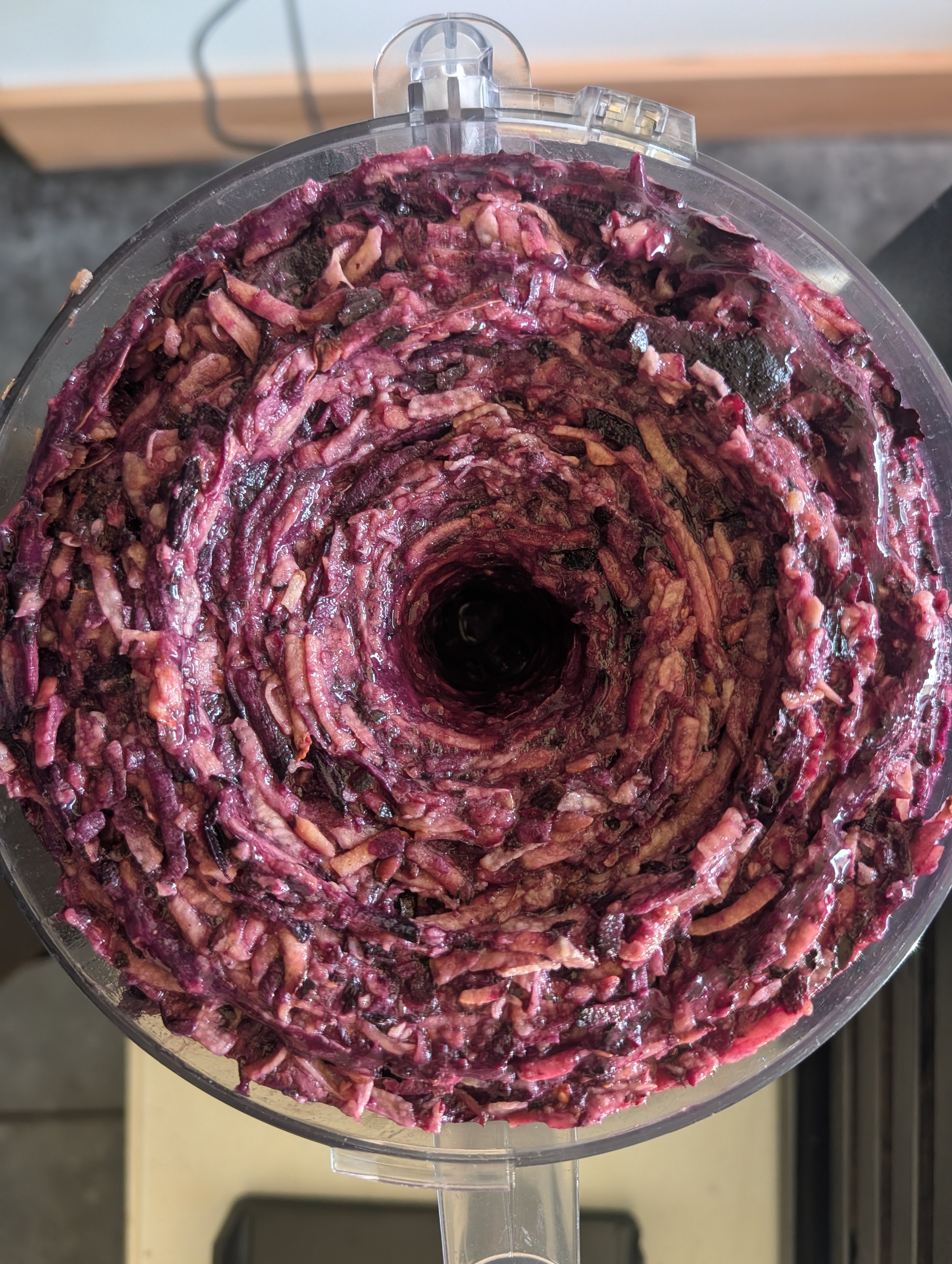
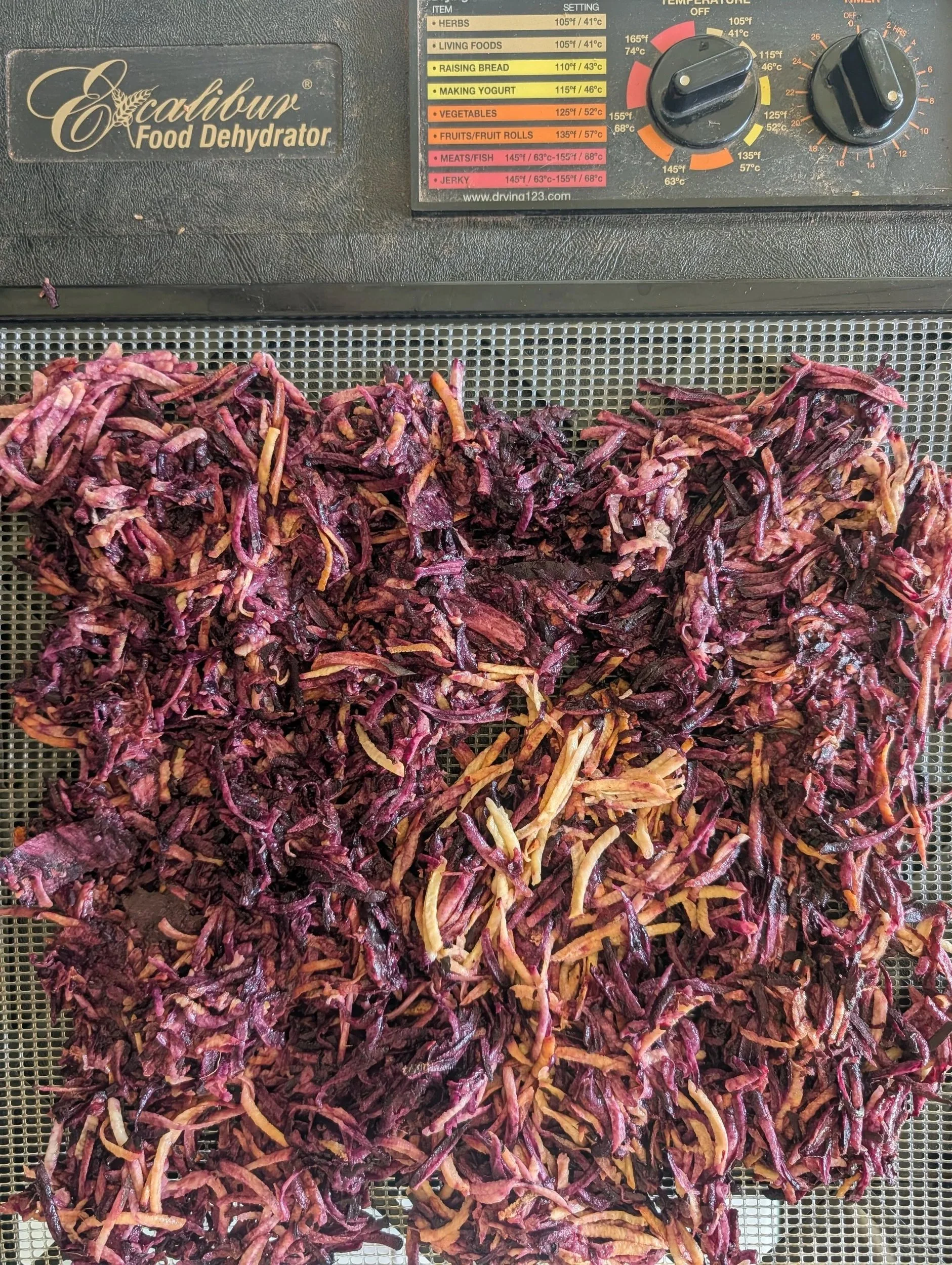
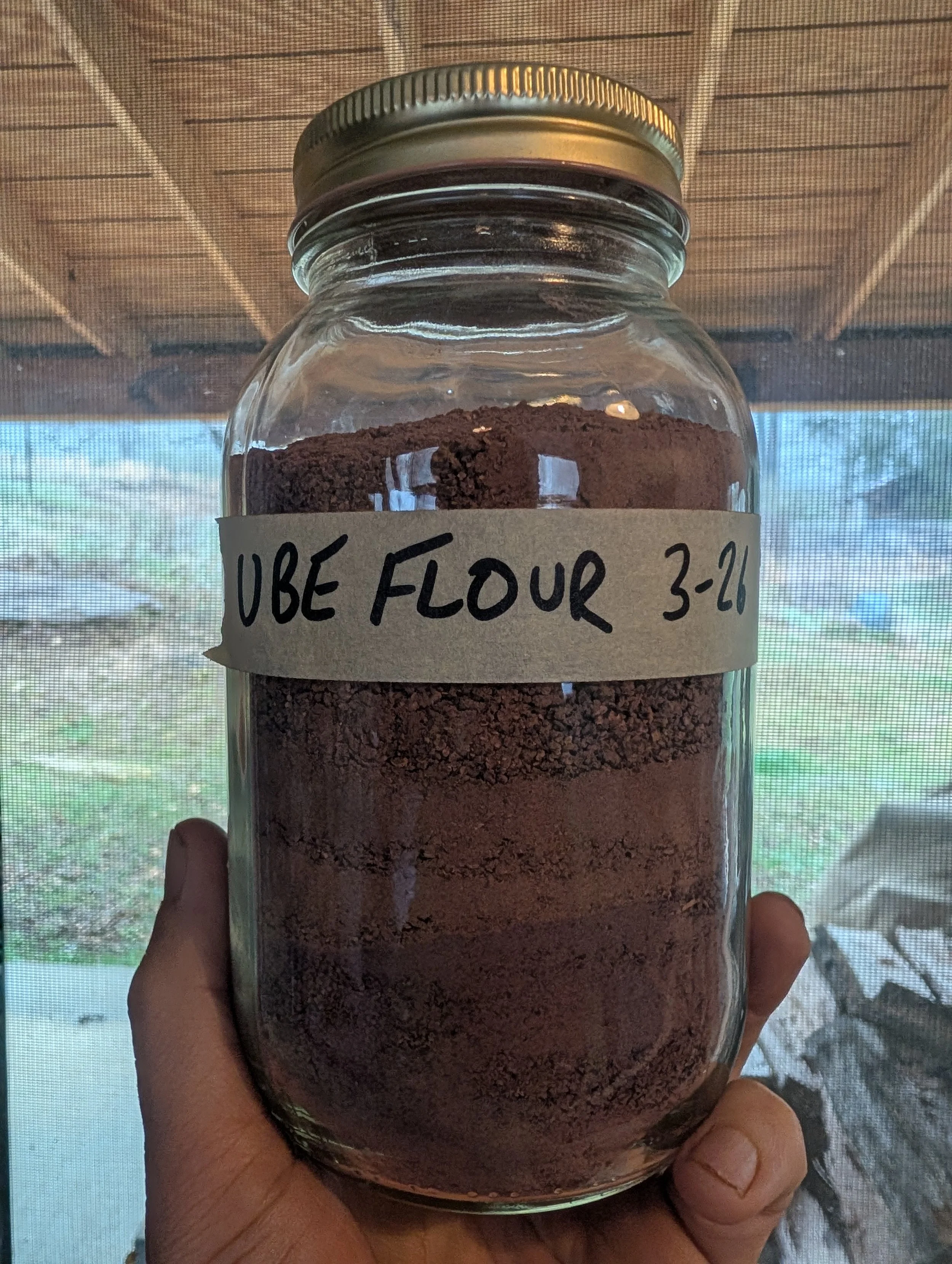
I started with 14lbs and 3oz of fresh ube and ended up with 1lb and 3.3oz of dried flour! The flour will store for a long time and can be added to many baking recipes to infuse a beautiful purple color and subtle sweetness to the recipe. Please reach out with your favorite ube recipes!
