Chris Smith’s Collard Crop Story
The Heirloom Collard Project
By Chris SmithThe classic greens of the South are mustard, turnip and collard. I’m not a massive fan of mustard greens, definitely favoring mustards of the whole-grain persuasion. I don’t mind turnip greens, although I prefer the roots, sliced thin and fermented.
But collards ... collards are a magical green.
I haven’t always known this. In 2017, at Monticello’s Heritage Harvest Festival, Dr. Sarah Ross of the Center for Research and Education at the Wormsloe Plantation historic site in Georgia and Ira Wallace of Southern Exposure Seed Exchange (SESE), dragged me into a conversation about a large U.S. Department of Agriculture (USDA) collection of heirloom collards, more than 90 varieties. Tor Janson, formerly of Seed Savers Exchange (SSE), was the other person at the table, and Ira and Tor had already been working to request and grow varieties from the USDA collection.
The aim was to take this beautifully diverse collection of collards; grow and evaluate them; regenerate seed stock; and offer them through seed catalogs so everyone could enjoy them. Soon after this meeting, we created a website (heirloomcollards.org) and an official name, The Heirloom Collard Project.
But the collards had a story way before I took an interest.
In 2016 Ira traveled to Charleston, South Carolina, where Dr. Mark Farnham, a USDA geneticist, was running an observational trial of all the collard varieties in the USDA Collection. Ira describes rows and rows of beautiful collards in all sorts of plant structures and colors and combinations. “It made me feel like we needed to make a commitment to regenerate these varieties and make sure they’re available to future generations of gardeners and farmers,” said Ira in a video about the project. Shortly after visiting Charleston, Ira reached out to Tor at SSE, and they started dreaming of how to bring these collards back to the people. Now, some of these varieties are available through SSE and SESE, and more seed regeneration work is underway.
But again, the collards had a story before Ira got involved.
Ed Davis and John Morgan, professors of geography at Emory & Henry College in Virginia, spent large chunks of the early 2000s driving around the backroads of North and South Carolina. They were searching for collards and are the people largely responsible for the USDA’s impressive collection of heirloom collards, which inspired the work of The Heirloom Collard Project. In 2015, they published Collards: A Southern Tradition from Seed to Table. This impressive book led Ed to Ira, and Ira to the collards.
But the collards had a story before Ed and John started searching for them. They acknowledge as much in their book, writing “contemporary Southerners owe much to the collard lovers who came before us — the cooks who developed and passed down over centuries so many delectable ways to prepare collards. We also owe hanks to those pioneers of the garden who did the work to develop the collard plant to what we know today.”
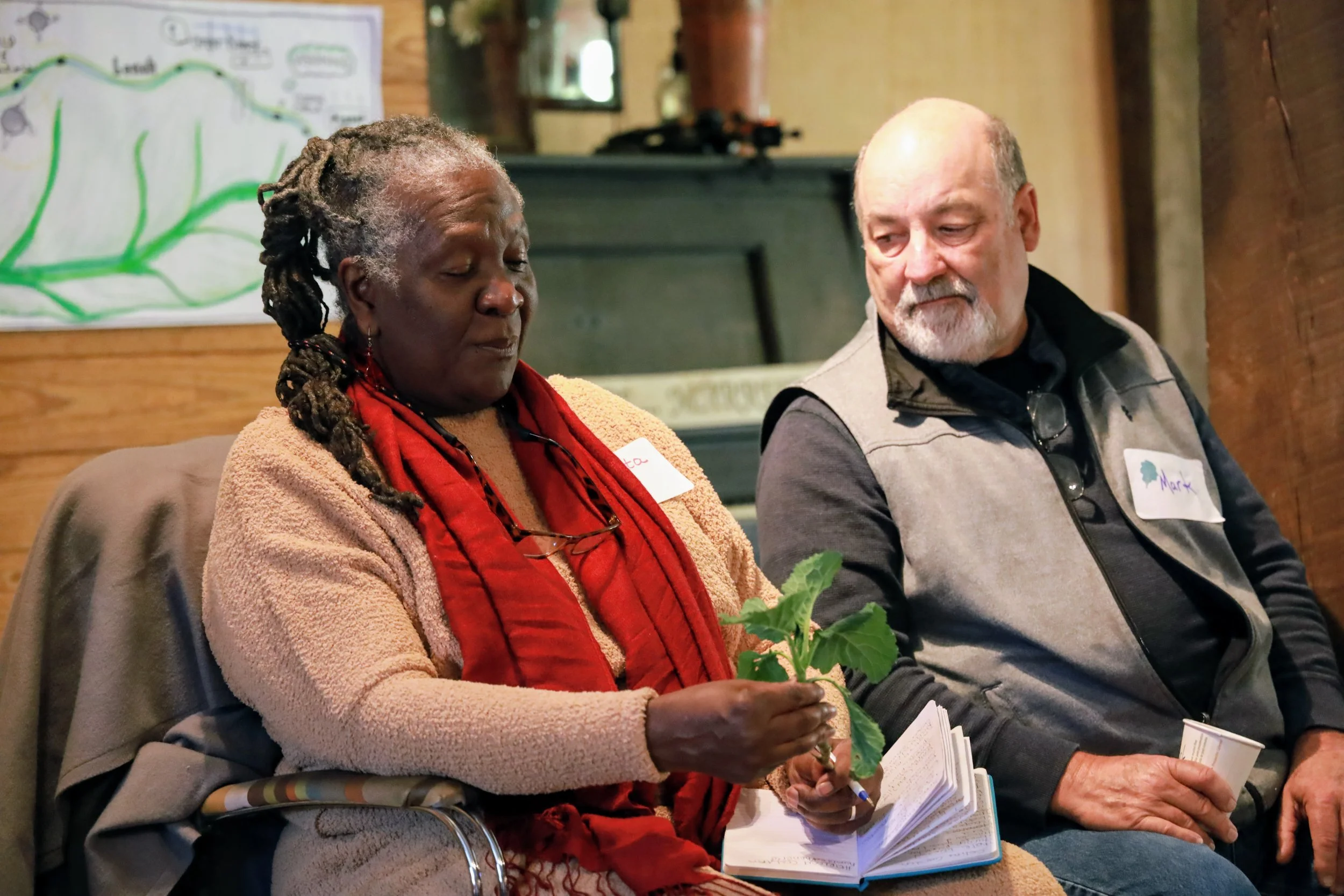
Bonnetta Adeeb and Mark Farnham at the 2021 Heirloom Collard Project visioning session in Asheville, NC.
It needs stating explicitly: We owe thanks to the enslaved African Americans who, robbed of their freedom and their homelands’ foods, adopted the collard and integrated it into gardens, kitchens, and therefore Southern foodways. This isn’t written about in the culinary and agricultural texts of the 1800s because enslaved people were forbidden from learning to read and write, but evidence of their influence shows up in the way food is cooked and the early cookbooks written by white women.
At the beginning of 2020, Norah Hummel and Phillip Kauth of SSE, Ira Wallace, Melissa DeSa of the Florida-based nonprofit Working Food, and myself came together and launched a nationwide collard trial with 20 heirloom varieties. Hundreds of people across the country grew a random selection of three varieties, and eight larger trial sites grew all 20. With all that collard energy, 2020 ended with a weeklong video series focused on education and celebration around collards, now viewable at heirloomcollards.org/ collard-week-2020. The collard trials (and enthusiasm) overflowed into 2021, with overwintered collards and seed saving activities, and grant funding from the 1772 Foundation that allowed us to host a Collard Visioning Meeting in Asheville, North Carolina. Knowing that the collard story is way bigger than ourselves, we brought together an incredible group of collard-loving people to discuss the future of The Heirloom Collard Project. It was an inspiring and beautiful weekend, and many of the ideas are already weaving toward reality.
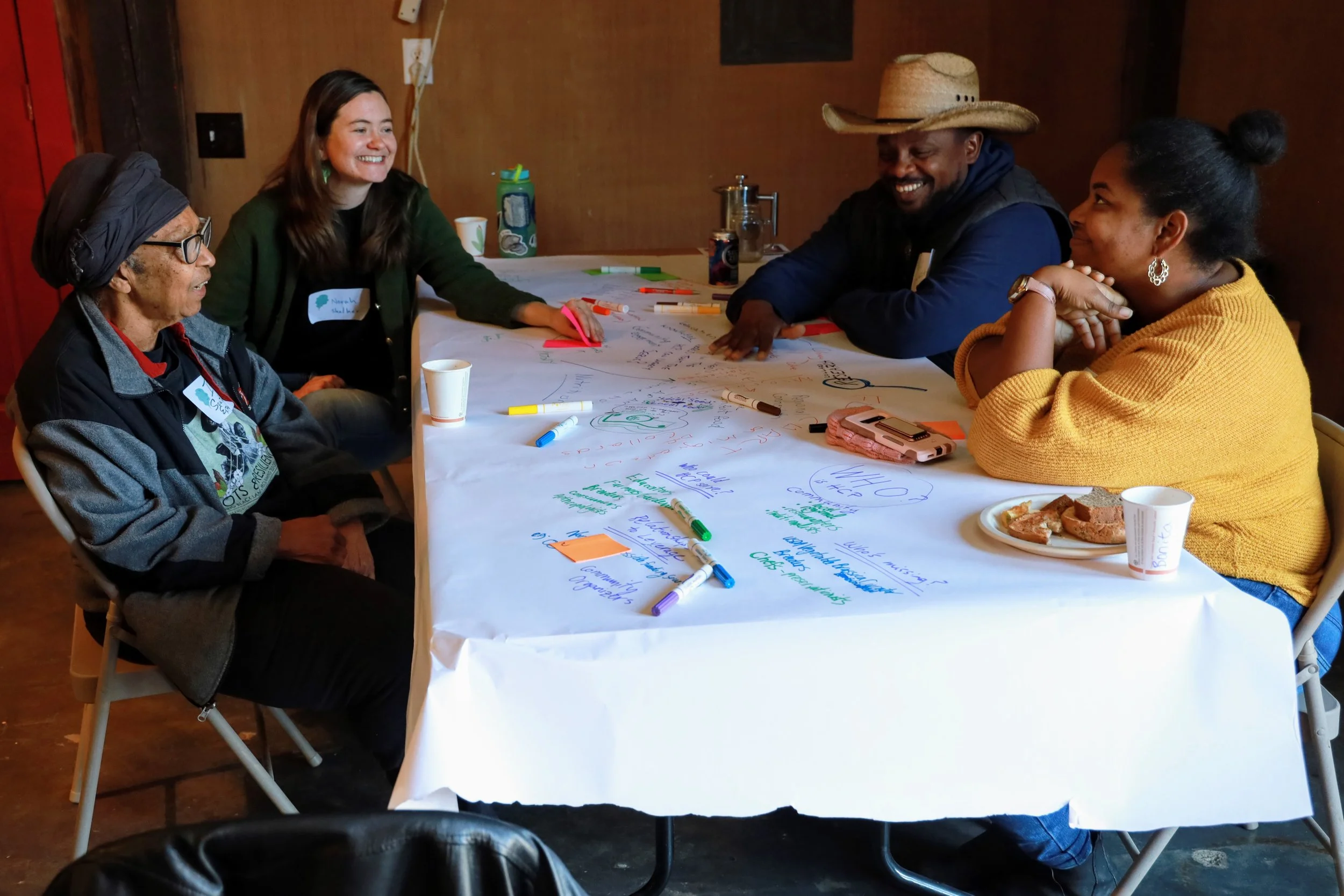
Ira Wallace, Norah Hummel, Jon Jackson, and Melony Edwards.
Working with seeds is always an important balance of honoring the past while looking to the future, and as we dream forward, it is clear there is much work to be done. The Heirloom Collard Project aims to reconnect the seeds and culture of collards through food and community, and we want many more people to join that community. Or, as Ira wisely and simply stated, when talking about the collard collection,
“You can grow some, and you
can eat some, and then your
commitment will be sealed.”
