A Diverse Watermelon Pre-screening Trial and Tasting
LuAnna Nesbitt
In the summer of 2024, I grew a small yellow watermelon I'd received from my dear friend and seed mentor, Heron Breen, called ‘Wilton's Sweet’. I grew up eating lots of watermelon, but it was my first year growing watermelon in my home garden, so I was excited.
Wilton's Sweet produced a fine amount of fruit, which was enjoyed by myself and my family, with plenty to share with friends. One small melon was forgotten, left sitting on the back of my countertop. It was nearly Thanksgiving before I finally cut it open. The melon was extremely yellow, sweet, and delicious. I had never had a watermelon after September, much less one in late November. After growing out this lovely yellow type and seeing how well it stored on my counter, I couldn't stop raving about it to Leeza at work.
Over the next few weeks, Leeza and I chatted about watermelons a lot; the current genocide happening in Palestine and how watermelons are a symbol of hope and resilience for Palestinians, watermelon's historical connection to the Southeast region, our love for them, and how great it would be if there were more watermelons sold in our area that demonstrated more watermelon diversity. We realized there are not many great smaller-sized watermelons being grown around here, so we started planning a larger watermelon trial at the Experimental Farm.
We spent days researching small "ice box" types (small enough to fit into an average refrigerator's ice box) and medium-sized watermelons since most people like smaller varieties. We connected with local folks who had a history of growing watermelons, and also leaned on our trusted colleagues and seed growers on the East Coast to help us decide which varieties we wanted to grow. We considered size, shape, patterns, colors, and flavors. We planted out 21 different varieties of watermelon, taking up about three 80-foot rows on our farm.
Our "check”, a variety that is pretty dependable in the region to compare the rest of our varieties to, was 'Crimson Sweet,' a beloved watermelon variety grown in masses in the South for its extremely sweet taste and vibrant red color. We hoped to find a few varieties that could rival it.
We harvested most of the watermelons in August in preparation for our first Trial to Table of the year. At this event, chefs featured our watermelons in their dishes and we hosted a watermelon tasting for attendees to offer us feedback on the many varieties we had. We hauled all of our beautiful melons over to the tasting site, sliced them up, and had folks rank them on a scale of one to ten (one being the worst watermelon you had ever tasted and ten being the best).
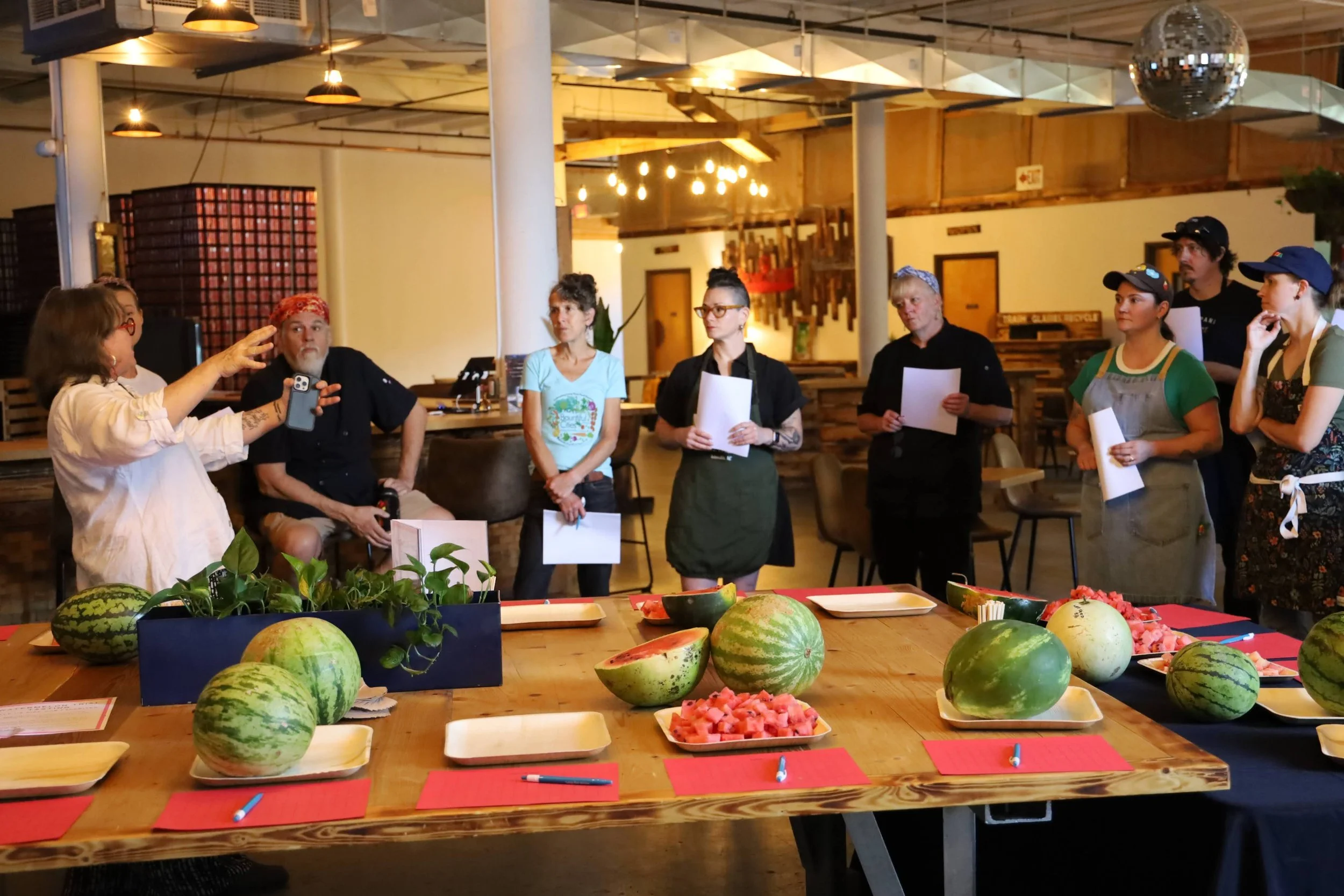
Chefs getting ready to taste all the watermelons at our August 16th, 2025, Trial to Table
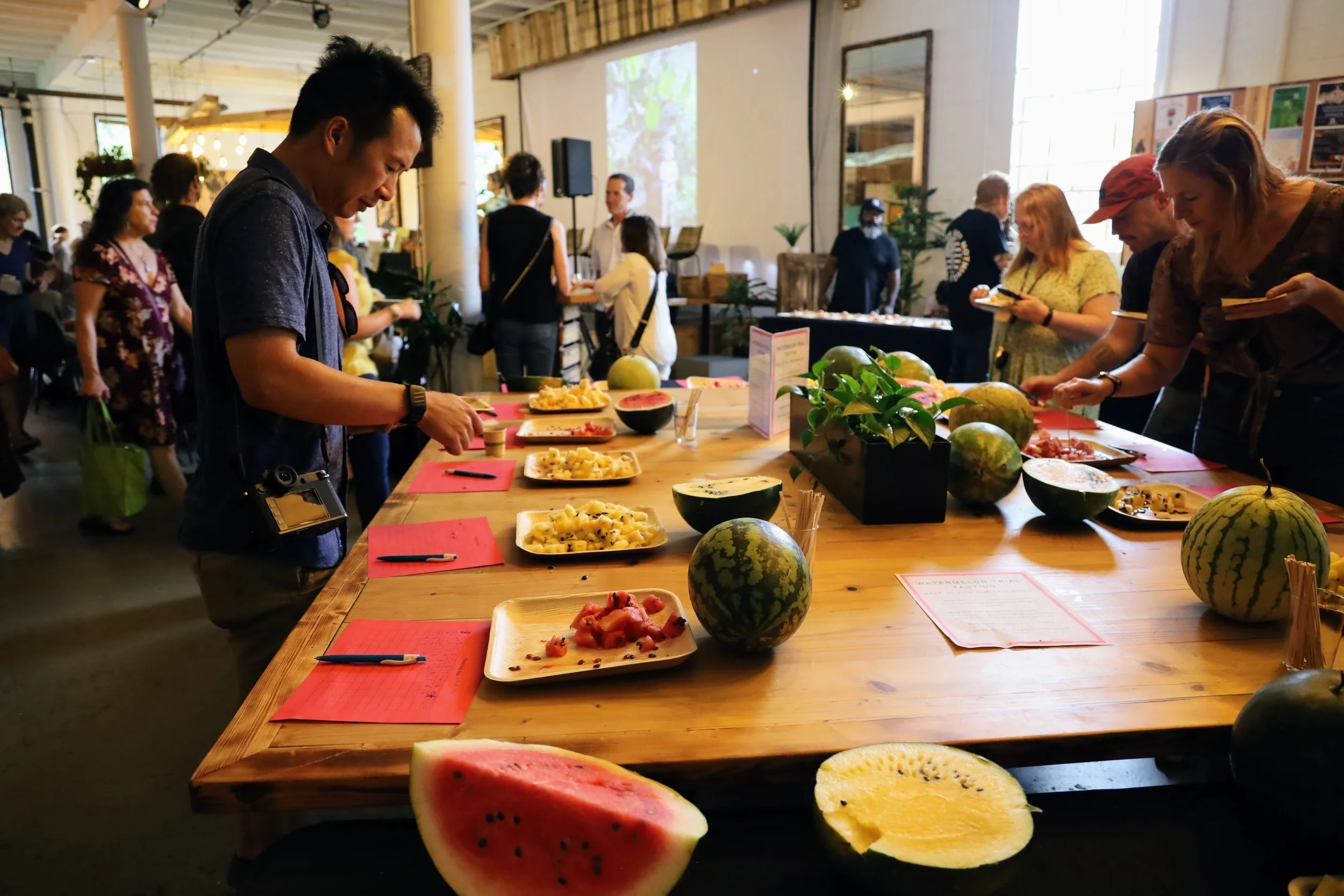
Attendees enjoying and ranking the watermelons at our August 16th, 2025, Trial to Table
To demonstrate some of our findings from the tastings, I compiled the average scores for each variety and our top ten list from the combined chef and public feedback. Leeza and I also conducted our own separate tasting of all varieties.
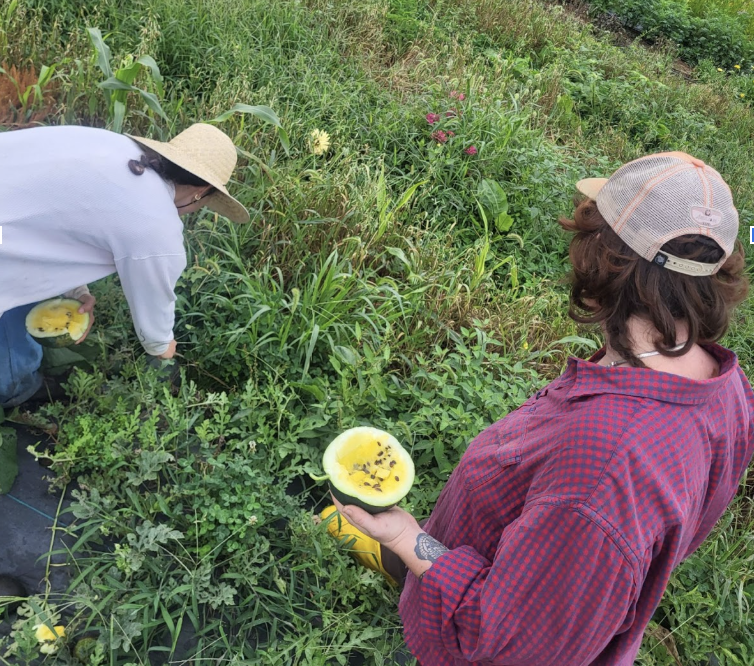
Lu & Leeza tasting watermelon varieties in the field
When reviewing these results, it's important to acknowledge a few critical variables. First, the melons tasted were harvested at different stages of maturity, which naturally impacted their flavor profiles. Furthermore, some varieties weren't perfectly ripe in time for the event, meaning they were not tasted at their peak. We must also account for the extremely wet few weeks leading up to the harvest. Despite their name, too much rain can lead to lower sugar content, diluting the flavor and resulting in a "watery" texture. Given these limitations, we recognize that while the tasting was excellent for highlighting the best varieties, it may not definitively show us the worst watermelons.
Chef/Public Top Ten Varieties
Variety: Chef Tasting Score (1-10, avg.) Public Tasting Score (1-10, avg.) Overall Average Tasting Score
Crimson Sweet (check): 8.4 | 7.1 | 7.8
Chou Chuh Red: 8 | 7.2 | 7.6
Polish: 7.7 | 7.1 | 7.4
Marney’s Marble: 7.4 | 6.1 | 6.8
Moonbeam: 6.8 | 5.2 | 6
Sweet Siberian: 6 | 5.8 | 5.9
Winter King & Queen: 6.9 | 4.8 | 5.9
Adana Black Seeded: 6.4 | 5.2 | 5.8
Wilton’s Sweet: 7.2 | 3.7 | 5.5
Blacktail Mountain: 6.3 | 4.0 | 5.2
USP Top Varieties
Variety: Tasting Score (1-10, avg.), Keywords
Chou Chuh Red: 9.5 |Really juicy and crisp, smoky flavor yet sweet, love the outside/size
Crimson Sweet: 9 | Somewhat honey flavor, clean and classic, quite big
Sweet Siberian: 9 |Very neutral color, flavor is really good, nutty mocha
Osh Kirgizia: 9 | Complex, orange marmalade, light, really sweet, very promising
Adana Black Seeded: 8.5 | Deep red color, very juicy, yummy, not too seedy
Marney’s Marble: 8 | Apple juice flavor
Polish: 8 | A little mealy, classic and sweet
Borries Yellow: 7.5 | Honey flavors, not too sweet, pale yellow, fleshy
White Seeded Anya: 7 | Need to see more ripe!
Blacktail Mountain: 7 | Smokey, less sweet, good deep red, small seeds
Winter King & Queen: 7 | Honey!
Honey Island: 7 | Nice and yellow, honey floral notes, not too seedy
Although these findings are nuanced and many factors must be considered when interpreting them, they are extremely important and useful for the work we do. With funding from Southern SARE and collaboration with a cohort of experienced seed growers in the area, we are hosting a series of on-farm variety trials for six key southern crops: okra, sweet corn, and sweet potatoes (2025), and collards, squash, and watermelons (2026). For most of these crops, we have a substantial base of previous work and knowledge. For watermelon, though, it felt like we were truly starting from scratch. This season's watermelon tasting trial served as a variety screening, helping us narrow down the most promising candidates for our larger on-farm growouts. These official on-farm variety trials are designed to assess promising Open Pollinated (OP) varieties against regional market standards. The goal is to present farmers with tested varieties that have proven successful in the area and show excellent potential.
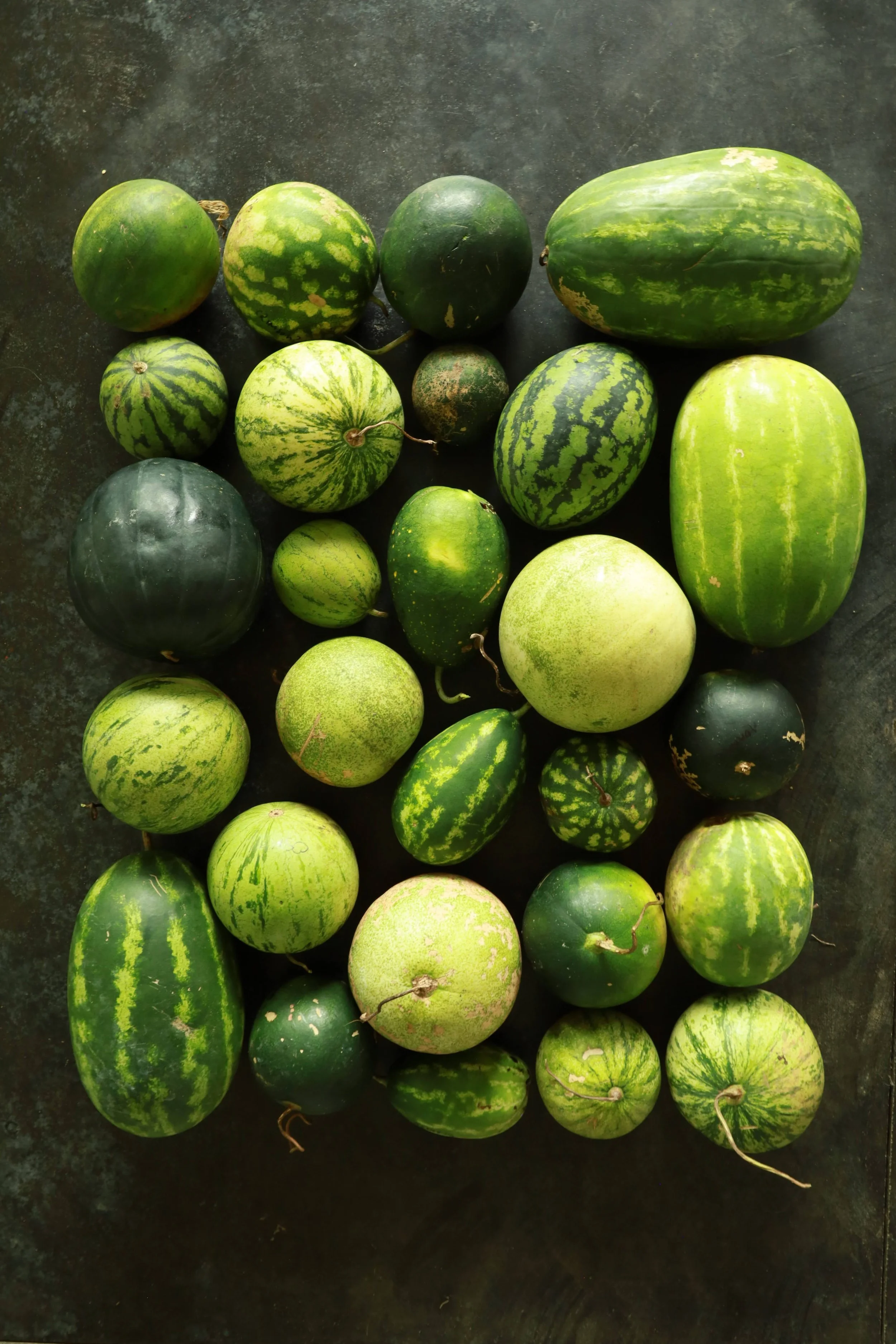
Watermelon trial diversity
Thanks to this pre-screening trial, we now have data on a diverse group of watermelons, with many proving successful, that we can present to our farmers. Several of these varieties will likely be included in our Southern SARE farmer trials next year, where three farmers (including us) will grow out six varieties of watermelon, gather data throughout the season, and offer insight on the melons considering overall performance and taste. This work aims to make reliable recommendations to other farmers toward the goal of diversifying the crops grown and eaten in the region.
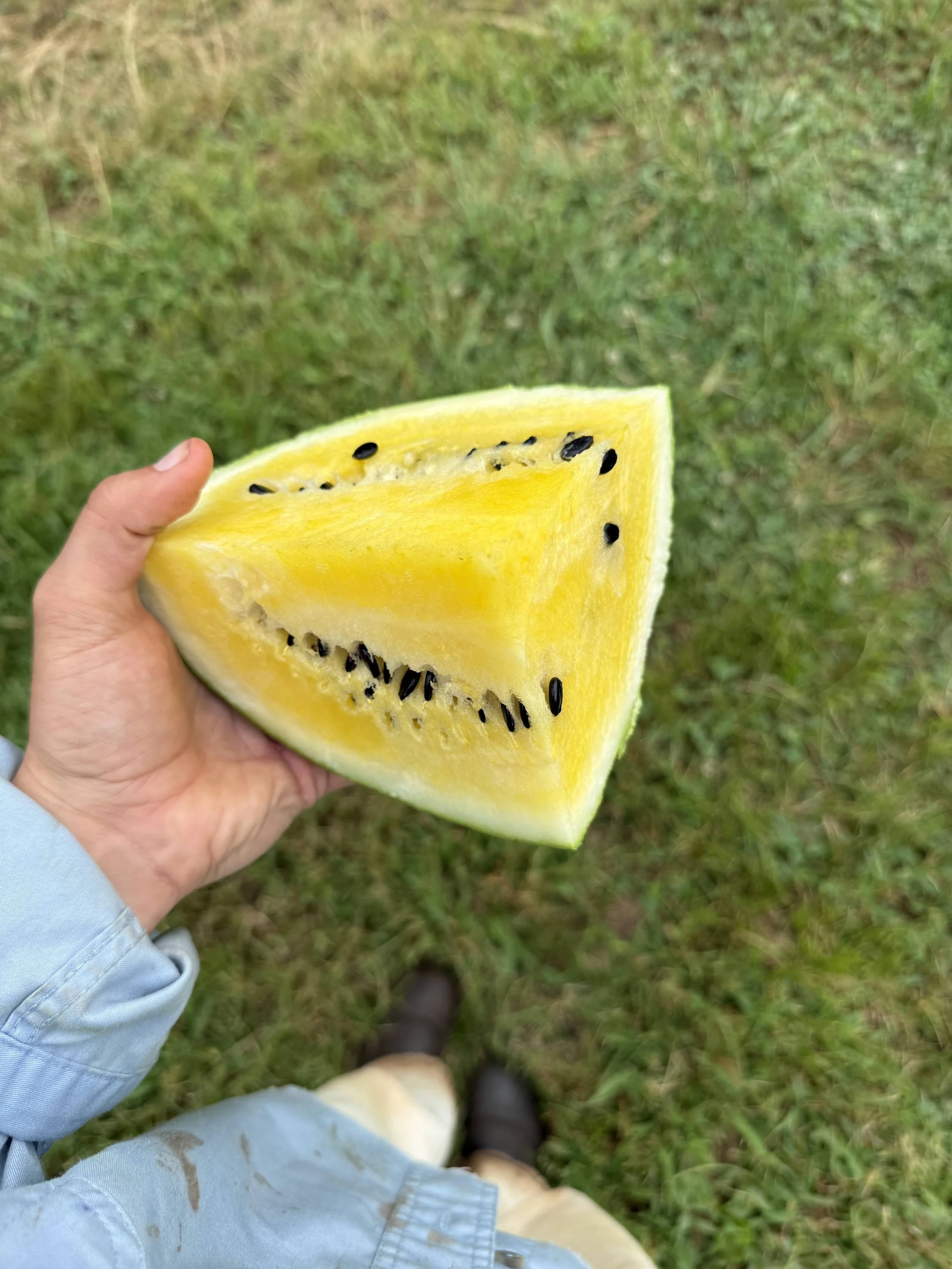
Wilton’s Sweet
Ultimately, this pre-screening trial was a success, and demonstrates how our personal discoveries, like the late-season sweetness of a single ‘Wilton’s Sweet’ melon, is turned into shared agricultural knowledge. We now move forward with data on a diverse and promising group of watermelons, confident that there are potential varieties, like ‘Chou Chuh Red’ and ‘Adana Black Seeded’, that can join 'Crimson Sweet' as regional favorites. These initial findings will inform our on-farm trials next season, where dedicated farmers will select and grow out watermelon varieties, a necessary step towards making reliable recommendations, diversifying the crops available to our farmers and consumers, and ensuring our Appalachian food system is as resilient and flavorful as the stories held within it.
