Lessons from a Southern Pea Tasting
Southern peas, African peas, cowpeas, field peas… whatever you call them, you love them. We share that same love for them at the Utopian Seed Project. In 2025, we aimed to trial a handful of varieties and host a public-facing tasting to narrow down our favorites.
We hosted a 'Trial to Table’, a signature Utopian Seed Project event that gathers chefs and community members to celebrate a single crop through inspired dishes, focused on the humble Southern pea.
This event coincided with the one-year anniversary of Hurricane Helene. As our chefs shared stories of community strength and the vital roles they played in feeding the region after the storm, the Southern pea emerged to me as a moving metaphor for Appalachia and its people, both hardy, nourishing, and rooted.
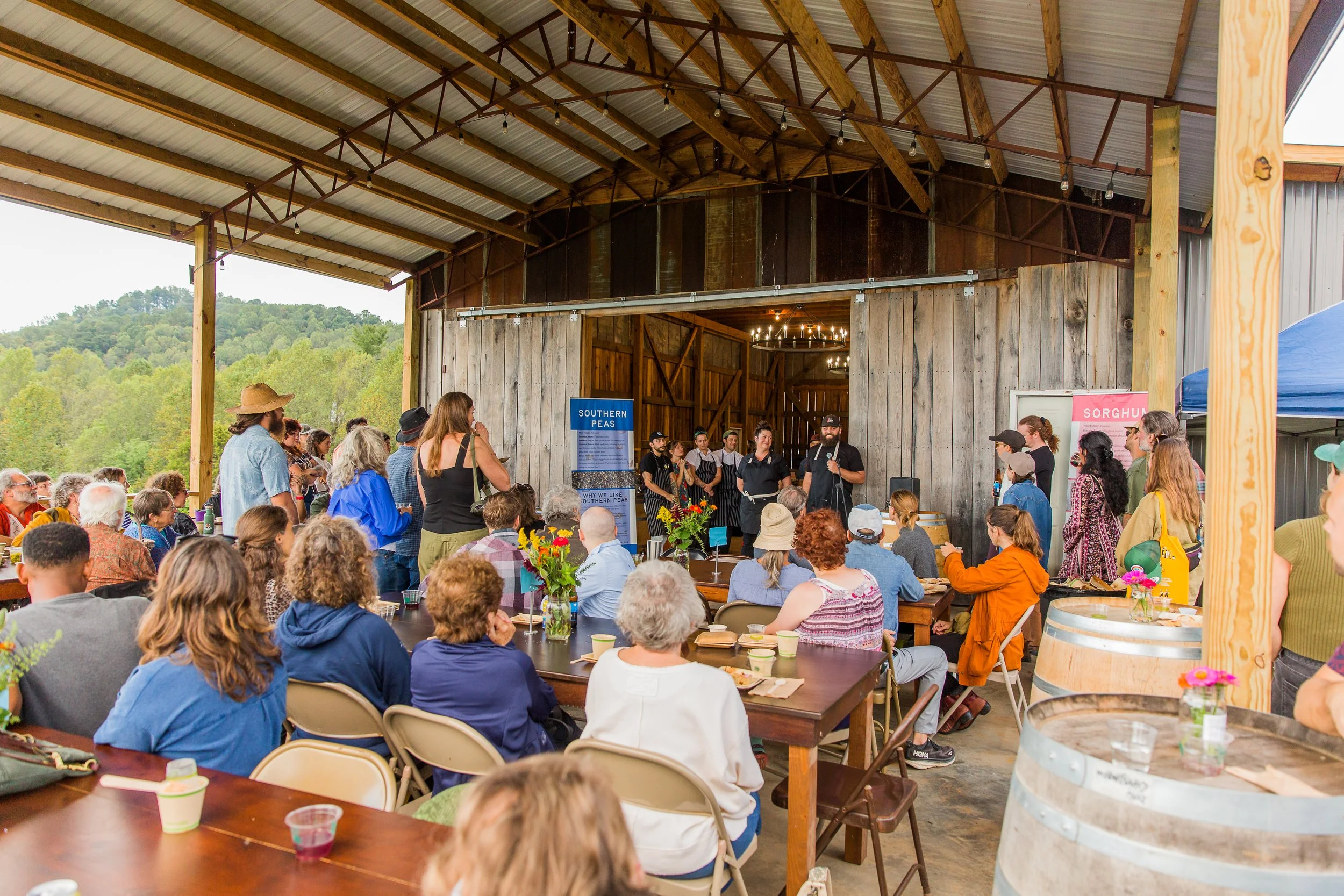
Storytelling at the Southern Pea Trial to Table at Addison Farms, Fall 2025.
During the event, we set up a table of seven beloved Southern pea varieties that had been cooked simply beforehand (simmered in salted water until fully cooked). Folks were encouraged to take a few peas per variety, enjoy them, and leave their thoughts and rankings for each one.
Pea findingsRank | Variety | Avg. Rating (1-10) | Taste Profile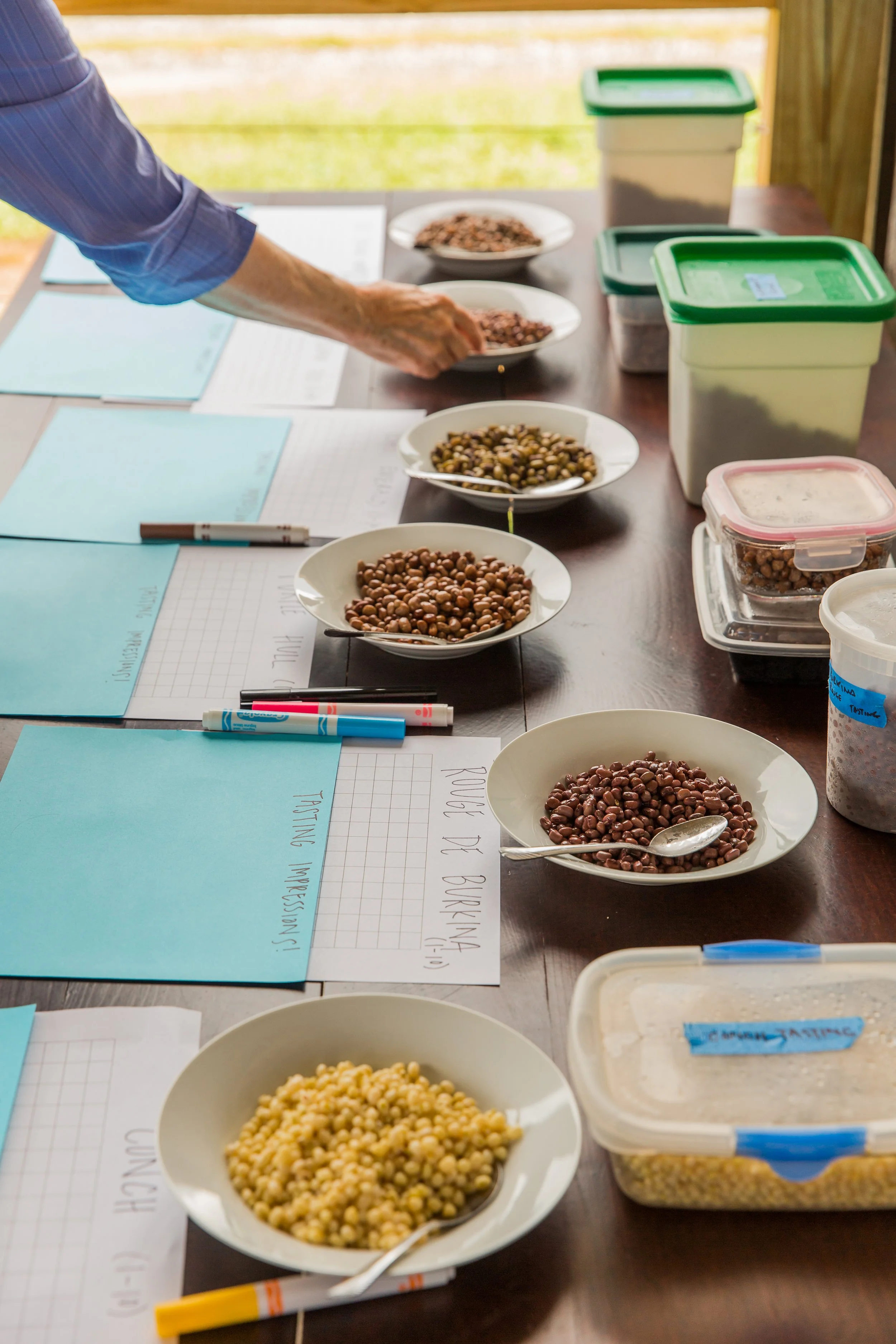
Trial to Table Pea Tasting
#1 | Purple Hull Whippoorwill | 8.0
Nutty, buttery, and bright.
#2 | Texas Emerald | 7.4
Grassy, bright, and edamame-like.
#3 | Sea Island Red | 7.3
Deep, smoky, and classic.
#4 | Rouge De Burkina | 7.1
Rich, sweet, and mealy.
#5 | Blue Goose | 6.8
Earthy, umami, and savory.
#6 | Grey Speckled Palapaye | 6.2
Subtle, herbal, and dry.
#7 | Conch | 6.0
Clean, delicate, and versatile.
Tasting Details1. Purple Hull Whippoorwill (Avg: 8.0): This variety was a crowd favorite for its complexity and bite.
Flavor: Bright and distinctly nutty; many tasters compared it to a lima or butter bean.
Texture: Firm and fleshy with a creamy finish.
Taster Note: "Incredible flavor; feels like it belongs in a high-end vegetable side dish."
2. Texas Emerald (Avg: 7.4): Notable for its striking color and fresh, garden flavors.
Flavor: Vegetal and floral with a sweetness like edamame or fresh snap peas.
Texture: Firm and hearty with a "clean" finish.
Taster Note: "Love the color! It tastes bright and alive."
3. Sea Island Red (Avg: 7.3): A soulful classic. This variety offers a more traditional "field pea" experience but with depth.
Flavor: Smoky, salty, and savory; some tasters noted a complex finish.
Texture: A perfect balance of a good "snap" on the skin and a creamy, soft interior.
Taster Note: "Classic black-eyed pea flavor, but elevated."
4. Rouge De Burkina (Avg: 7.1): Sweet and hardy. This variety reminded many of a red bean or a traditional sweet bean paste.
Flavor: Rich and pleasant with a lingering sweetness.
Texture: Grainy/mealy in a way that feels substantial; excellent for blending or stews.
Taster Note: "Amazing texture, reminds me of a high-quality red bean."
5. Blue Goose (Avg: 6.8): Earthy and savory.
Flavor: Hints of earth; very savory and similar to a traditional black-eyed pea but milder.
Texture: Fleshy and creamy.
Taster Note: "Dirty in a good way, very earthy and satisfying."
6. Grey Speckled Palapaye (Avg: 6.2): Unassuming and herbal. A subtle pea that plays well with other flavors.
Flavor: Very mild with herbal and vegetal undertones; a slight sweetness at the end.
Texture: Smooth but leans toward the drier side initially.
Taster Note: "A gentle, full-bodied pea that isn't too overpowering."
7. Conch (Avg: 6.0): Delicate and versatile, this variety acts as a wonderful vessel for spices.
Flavor: Very mild, clean, and delicate, reminiscent of rice.
Texture: Fluffy and light, though some noted a slight graininess.
Taster Note:"Subtle and light, would be perfect in a summer soup or grain bowl."
People had lots to say about the peas. Each variety was delicious in its own right, and these findings are very subjective to the day of, year of, or person tasting. Regardless, we will use these findings to help guide our decisions about what peas to grow next year and which peas we may suggest farmers to grow (of course, in addition to our own farmer input from our past experiences growing these varieties).
an ode to usthere is a quiet, stubborn strength in the Southern pea.
it doesn’t demand the richest soil or the easiest conditions,
but simply does the hard work,
usually, without praise.
like the Purple Hull Whippoorwill,
the Sea Island Red pea,
the people of Southern Appalachia.
it is a testament to the fact that even in the toughest ground,
beauty and community
can always be grown
Tips on Growing Southern Peas
1. Southern peas are the champions of summer. They love the heat and are highly sensitive to frost, so don't plant until the soil is consistently warm (usually a month after the last spring frost).
2. Peas are nitrogen-fixers, meaning they actually improve the soil they grow in. They handle poor, sandy, or clay-heavy soils better than almost any other crop. Though they aren’t picky, give them full sun.
3. Plant seeds about 1 inch deep. Space seeds 4 inches apart in rows that are 2-3 feet apart. Though many Southern peas are "bush" or "semi-vining" types, leave them a little extra room to sprawl.
4. Once established, they are incredibly drought-tolerant.
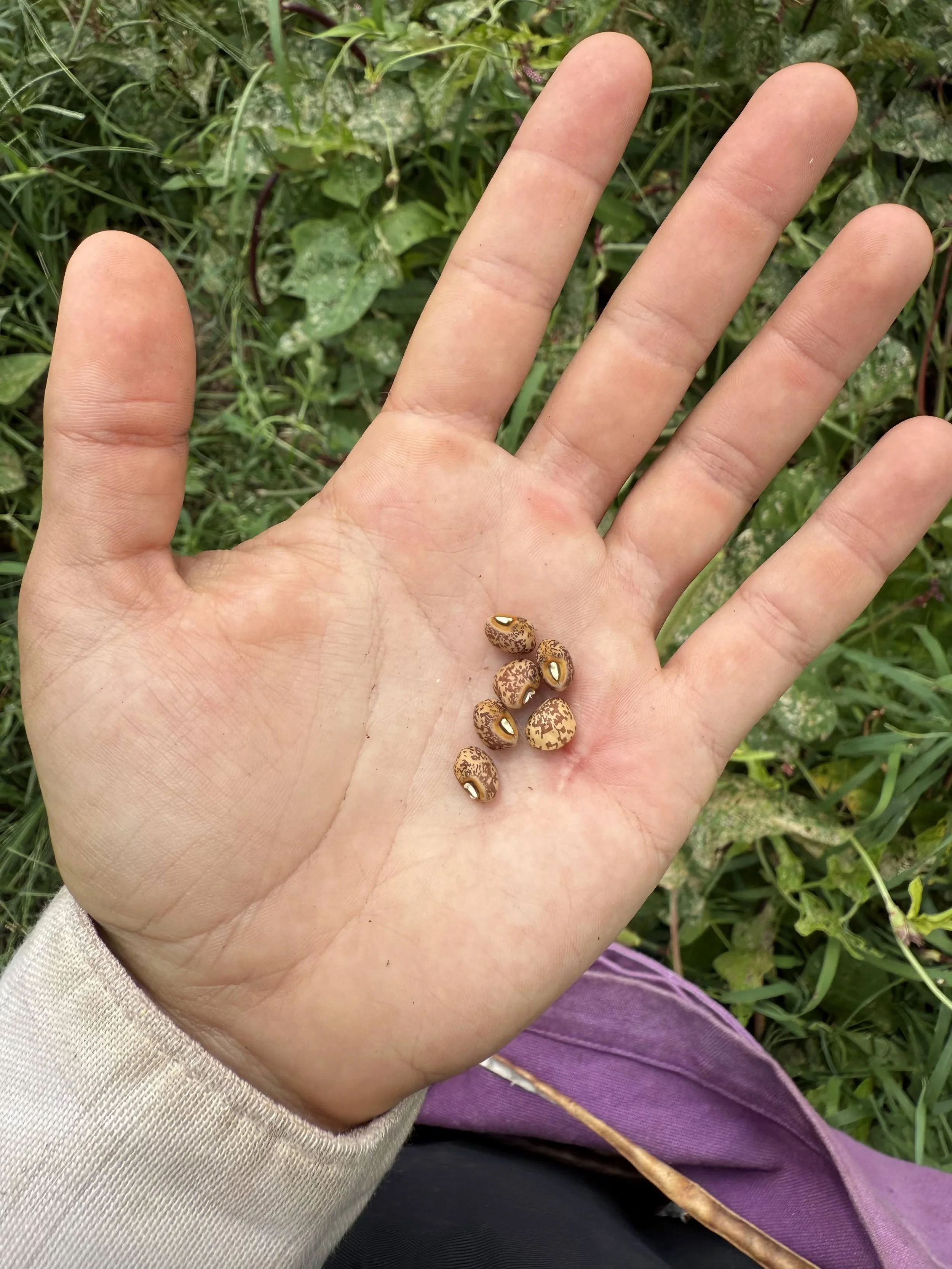
5. Harvest early when pods are succulent and seeds haven't fully formed (eat like a green bean) or, my favorite, let the pods turn brown and brittle on the vine to store them for winter soups or save seeds for next year.
