Crop Stories - Grief and Growing by Dr. Mehmet Öztan
Grief and growing:
An immigrant Seedkeeper’s
story of
cultivating connection
bY DR. MEHMET ÖZTAN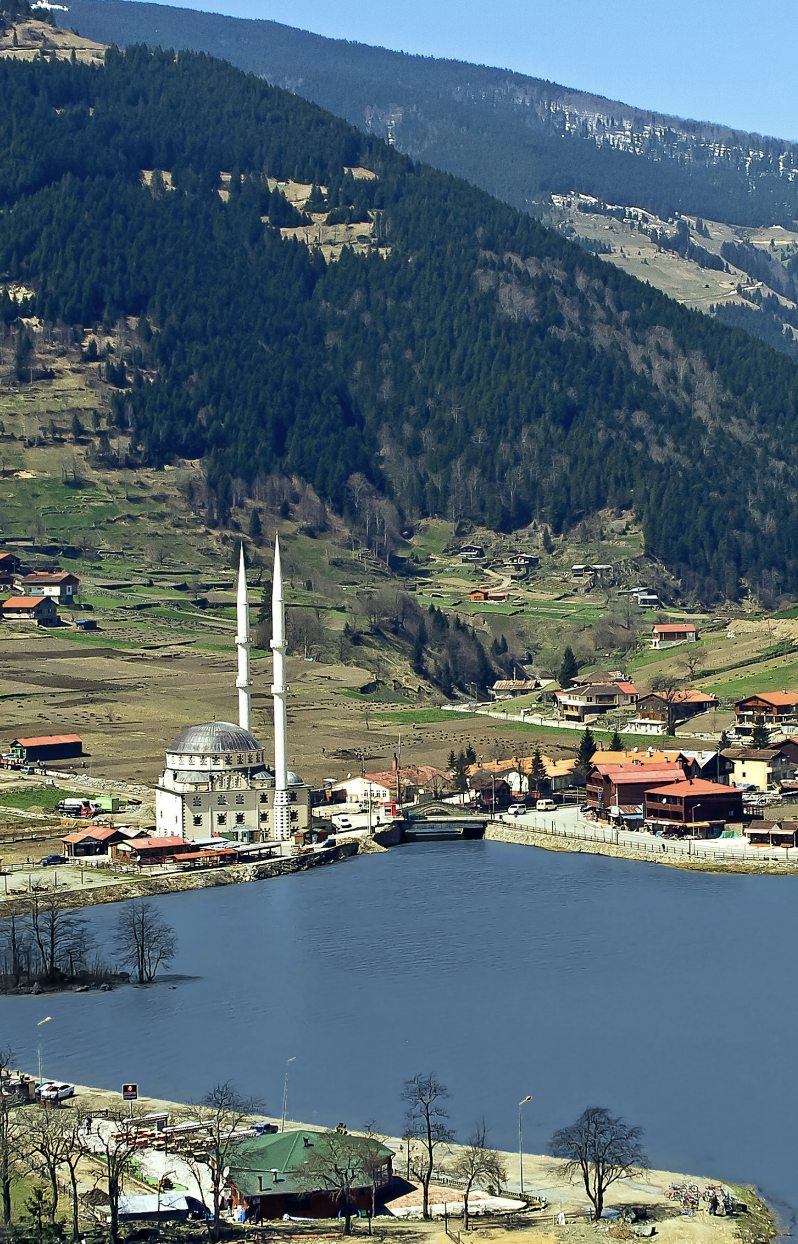
Trabzon, Turkey. Jose Alemañ Asensi/Flickr, CC.
When I think of Trabzon, I always think of my father.
When I think of Trabzon, I think of collards.
My father was born in this Turkish town on the coast of the Black Sea. In 1972, as a forestry professor, he returned to his home region where kara lahana, the Turkish term for collard greens, have been celebrated for thousands of years. The word lahana in Turkish comes from the Greek word láχano and means “vegetable”; kara is “dark.” Kara lahana leaves and stems are used in a variety of ways from pickling or stuffing to soup in Trabzon.
In 1986, my family moved to the Turkish capital, Ankara, from Trabzon. I was only 6 years old when we left, yet some of my most vivid childhood memories involve the food I had there: particularly fresh anchovies and huge, round Trabzon bread with butter from cows that grazed the region’s highlands. However, despite kara lahana’s significance in the regional kitchen, my mother wouldn’t cook Trabzon’s two staple meals, collard soup and stuffed collards — perhaps because she isn’t from the region and she found the dishes, enhanced with lamb fat, to be too heavy for her palate.
My father didn’t ask her to fix his regional delicacies, but showed his dedication to his birthplace in other ways. My father dedicated almost 30 years of his professional life to Trabzon, the Black Sea region and their people as an educator. He taught his students how to connect respectfully with nature and preserve the breathtaking forests of the region. He died in his sleep from a heart attack in 2003, working on a landscape project and far away from us. I am still very angry and frustrated for not having a final conversation with him before he left this world.
When I became a seedkeeper after I came to the United States as a graduate student in 2006, I realized how my father’s relations with trees, flowers and people influenced how I steward the seeds of my home land. I was living in Tampa, Florida, at the time, and I didn’t — still don’t — have access to Trabzon’s traditional bread or to fresh anchovies.
But soon after my arrival, I found out that collards are culturally important for Black people in the U.S. South. When my parents-in-law from Monroe, Louisiana, threw a party for me and my partner in 2011 to celebrate our marriage, I was amazed to find out that the plant thrives in the region, just as it does in the different climate of the Black Sea region of Turkey. Not only that, cornbread and collards were paired in the South, the same way they are in Trabzon. I began thinking about how seeds and food can connect people and places of different cultures thousands of miles from each other. That motivated me to grow the seed.
When I visited Turkey last November, with my mother and brother, I went to the Ankara restaurant Zigana, which specializes in the Black Sea region’s traditional food. I specifically ordered collard soup and stuffed collards.
I marveled again at the fascinating similarities between food traditions of the Black Sea region and the U.S. South; some ingredients native to the Western Hemisphere are used in dishes in both locations. The soup has barbunya bean (like the pinto), korkota (hominy corn), sweet red pepper, bulb onions, tomato paste, and chopped collard greens. Individual collard leaves are filled with ground veal or beef; a combination of hominy corn and bulgur or rice; cooked in bone broth and butter; and served with yogurt on top. Beans, corn, peppers and tomatoes were only introduced to Turkey a few hundred years ago through settler colonialism and trade, but the regional cuisine of the Black Sea region, like in other places with old food traditions, quickly adapted to these new ingredients.
I wasn’t very familiar with either kara lahana dish I had at Zigana, which seems contrary to how strongly I feel this plant connects me to my father.
Living in the United States, very far from my homeland, hasn’t been easy. If you don’t find ways to cope, being an immigrant may mean being forgotten by your own people and the place that gives you your whole identity, when you lose touch with them. When you are away from your homeland, people you know die, language and culture transform, friends get married, your family ages, and you can easily become a stranger to everyone. My seedkeeping work — in which I propagate and dis tribute mostly Turkish seeds that are rarely commercially available there or in the United States — is an effort to rebuild biodiversity. But I also have selfish reasons to be a seed keeper: to lessen my distance to my people, land, culture and memories. Seeds help me keep my proximity to all the things I don’t want to forget, through stories, flavors and recipes.
Since my partner and I co-founded our seed company, Two Seeds in a Pod, in 2013, I have introduced more than 100 seed varieties of my homeland to the commercial seed market. However, despite all my interest in saving seeds from Trabzon’s kara lahana, in almost 10 years, we’ve never been able to offer them in our catalog either when we were in Florida or after we moved to West Virginia. Bad timing, farmer’s fatigue, neglected seedlings, high humidity at the time of seed maturity: Something always kept me from fulfilling my role as a seed saver. I had to repeatedly source the seed from a gardener friend who lived in Istanbul until two years ago. I’ve often wondered — as I’ve introduced scores of Turk-ish-grown eggplant, okra and other vegetables — whether my failure in saving enough seeds from my crops to sustain my successive plantings is deeply rooted in my emotions, particularly my frustrations about my father’s sudden death and my desperation to reconnect with the plant and place I strongly associate with him.
“Seeds help me keep my proximity to all the things I don’t want to forget, through stories, flavors and recipes.”
In 2022, almost a year after we built our greenhouse on our farm in Reedsville, West Virginia, I finally have a small but vigorous crop of Trabzon’s kara lahana growing inside the greenhouse. It successfully weathered winter’s low temperatures without heavy frost damage, a process that will stimulate spring flowering and summer seed production. I will never know whether my father liked kara lahana, ate it at restaurants or if his mother ever cooked it at their home. We never ate it together. What I do know is that after almost a decade of struggle, growing seeds of this resilient vegetable, season after season, keeps my memories with my father alive. I can only hope that the growing will ease my grief. Sometimes the thing you most want is so out of reach.
