 Image 1 of 3
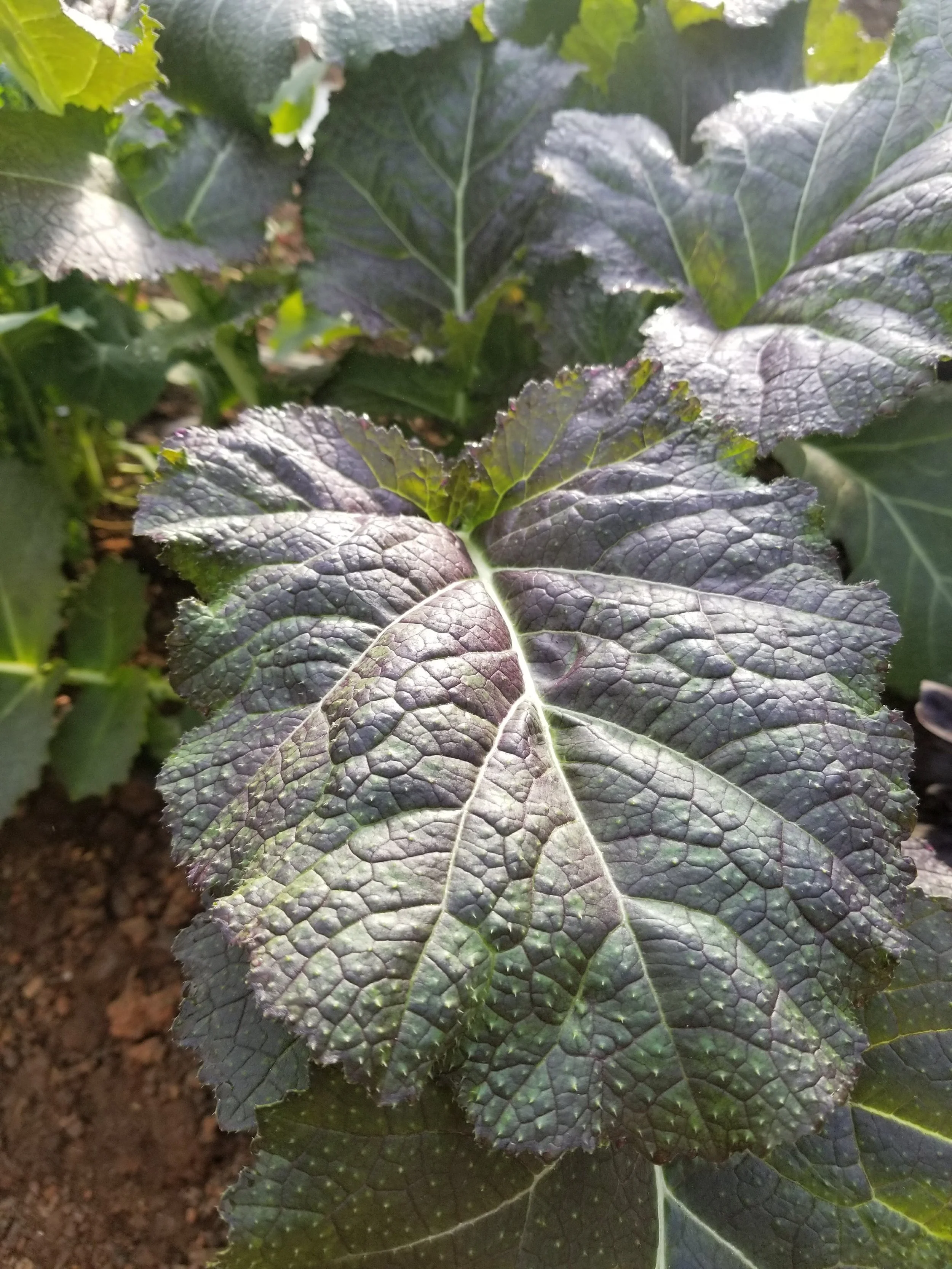 Image 2 of 3
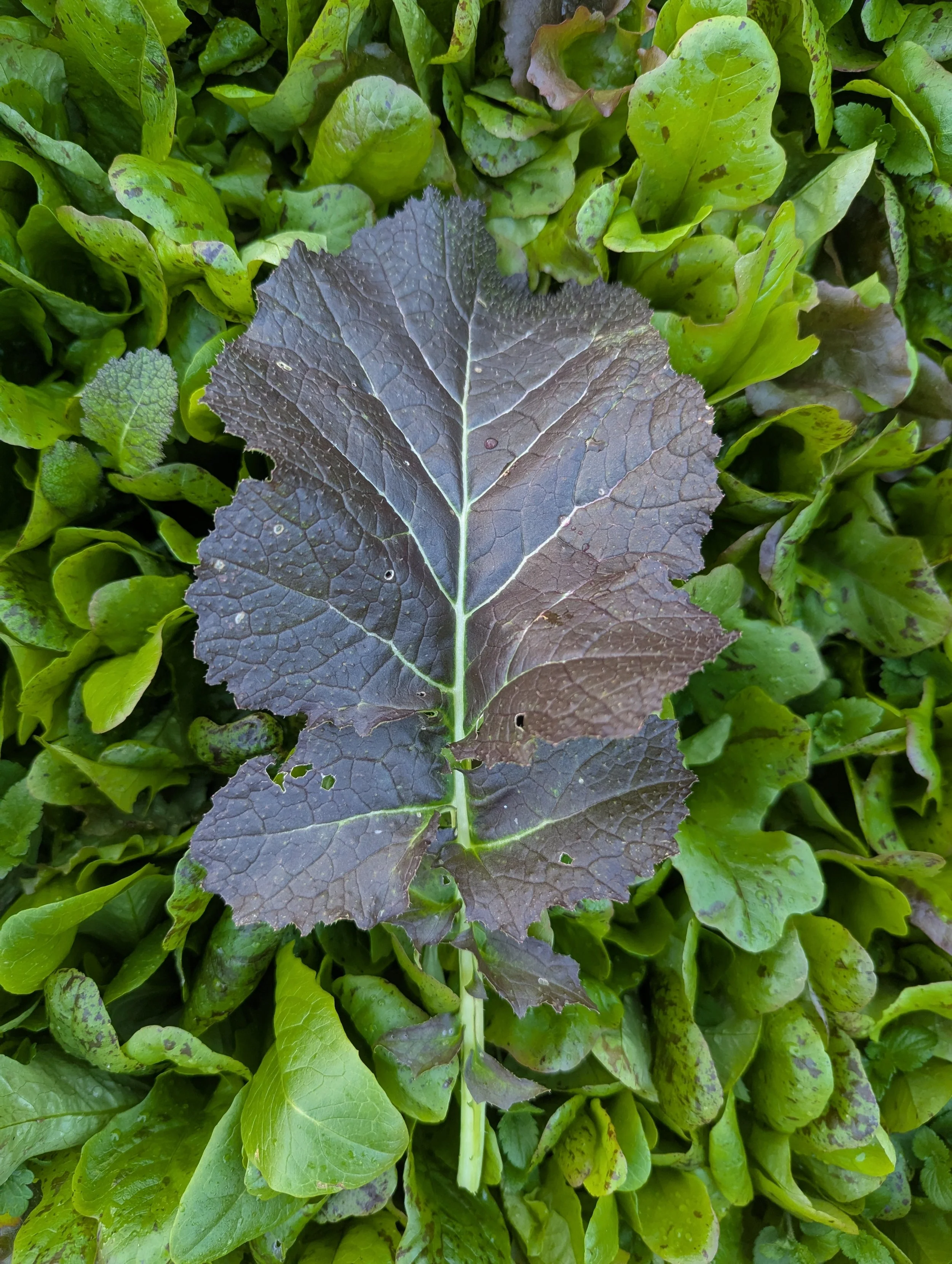 Image 3 of 3
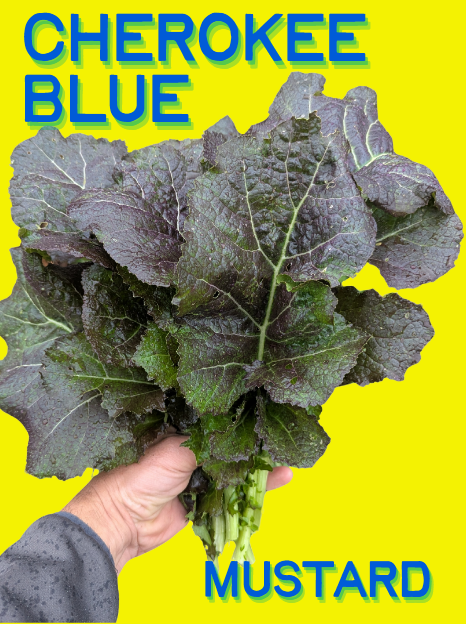
This Cherokee Blue Mustard is a favorite of Chris Smith and has been self seeding in his home garden for at least 8 years. It’s very vigorous, often the first thing to come up in his garden in the spring, and will self seed again in the fall. This seed crop came from transplanted seedlings that we dug from Chris’ garden in spring and transplanted to the USP farm. The plants grew beautifully and produced a magnificent row of yellow flowering mustard plants! Chris has used Cherokee Blue as a classic southern green, but also processed the seeds into a delicious condiment. The plants are so productive that you can have your greens, mustard, and seeds each year!
Note: the leaves are not completely smooth and therefore better eaten, cooked or processed.
Chris received seeds from Jim Veteto, who directs the Southern Seed Legacy. Jim said, “I originally got that seed [Cherokee Blue Mustard] from Blaine Bourgeois in 1999 through Seed Savers Exchange. He was living in Salem, Arkansas, in the Ozarks. At the time, he had a small artisan plant and seed catalogue called Hortus Botanicals. It had a mix of very unique heirloom vegetable seeds and entheogenic plants. Joe Hollis used to correspond with him. Soon after the turn of the millennium, he just kind of disappeared off-the-map as far as I or Joe knew. I have spread those Cherokee Blue Mustard seeds far and wide from here to Arkansas and Texas. I never could verify if they were actually 'Cherokee' in origin. During my dissertation work, I documented several other Cherokee mustard greens (Cherokee Winter Mustard, prominent among them), but I never did see that Blue Mustard among the Eastern Band or Cherokee Nation.”
Chris followed the lead to Seed Savers Exchange, who shared the following information:
Cherokee Blue Mustard, Acc#113859: Donation year is unknown, but this variety was donated by the late Wade Wofford of California who got his seed from Jos Guarrera-Torre of California.
Yearbook listers report both blue and green plants, sounds like folks tended to select for blue due to the name, however we don't have information confirming that this variety was originally all blue.
Cherokee Blue Mustard, Acc#113836: Donated by Dr. John Wyche, who says this variety traveled over the "Trail of Tears" in 1834.