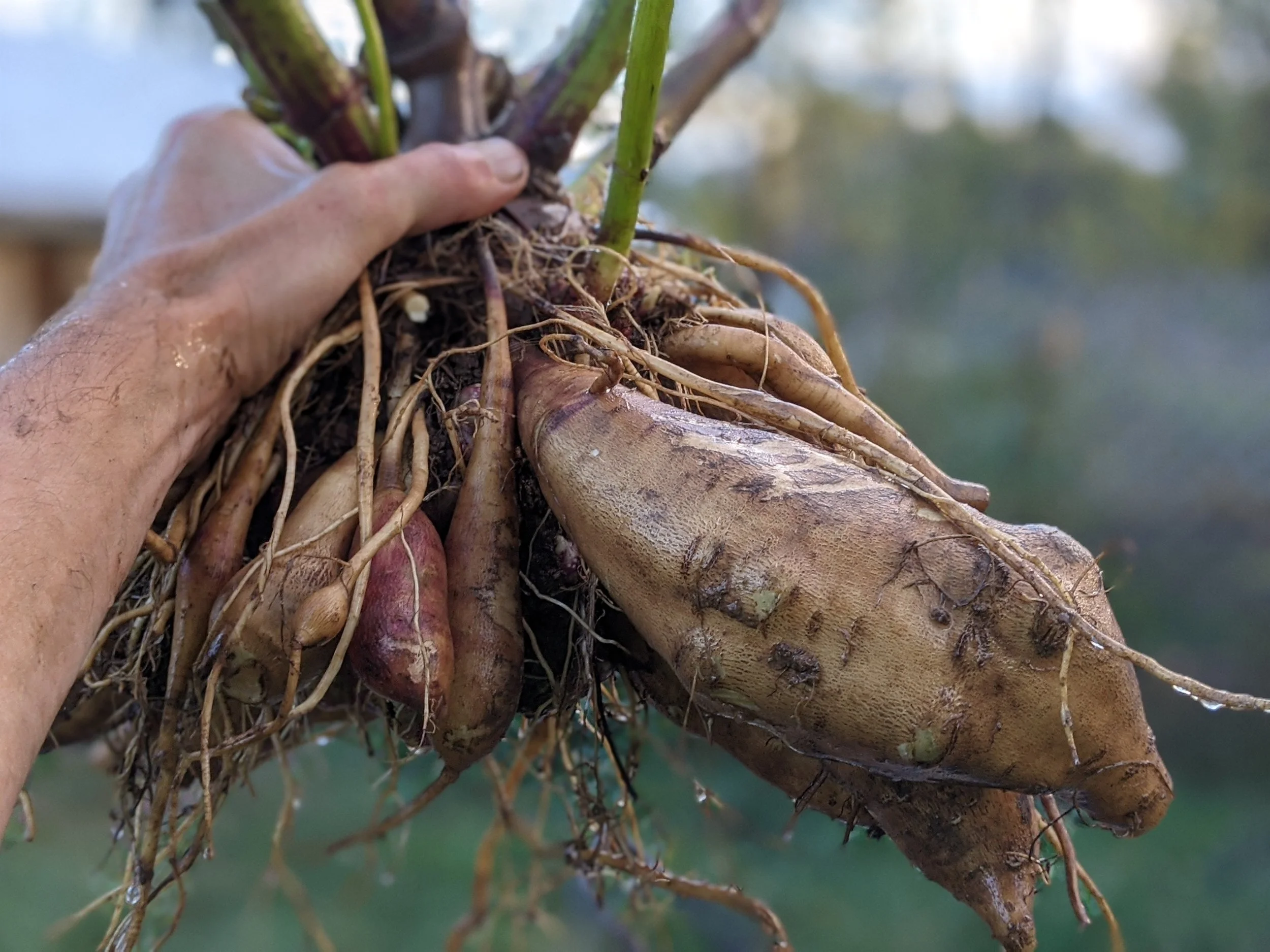
Yacon

Fun Facts
Plant Family: Asteraceae
Botanical Name: Smallanthus sonchifolius
Botanical Origin: Andean South America
Common Names: Bolivian sunroot (English-speaking regions), ground pear (English-speaking regions), yacón (internationally), Mexican potato (North America), llacon/llakuma (Andean indigenous regions), Peruvian ground apple.
Note: sometimes referred to loosely as “jícama” in parts of Central America due to textural similarity, but this must not be confused with the true jícama Pachyrhizus erosus.
Edible Parts: The tubers are used as a vegetable, but can also be juiced and then boiled down to syrup; leaves, occasionally used in teas or as wrap for cooking.
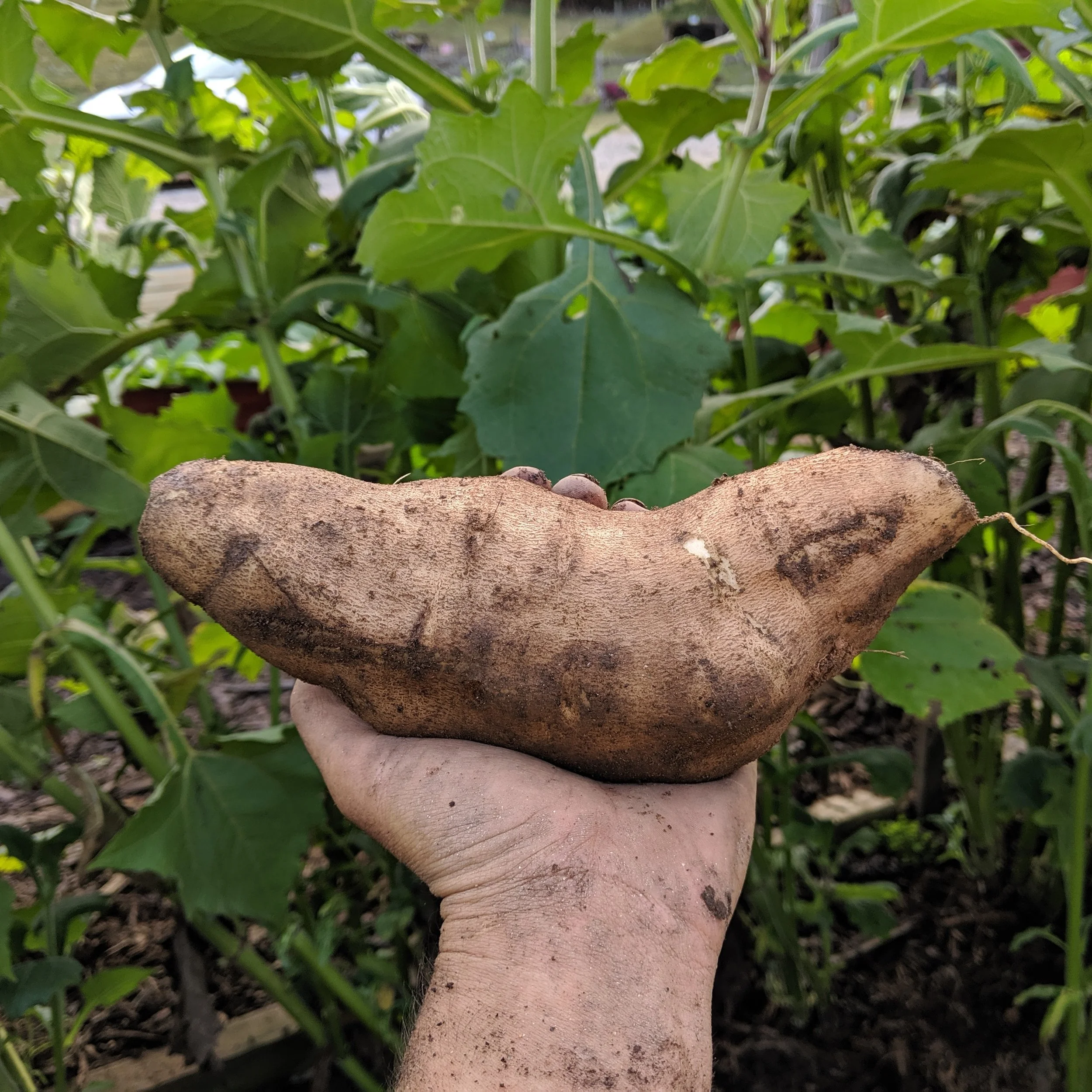
Yacon is a true delight and I’m surprised more people don’t know about it. It grown for its edible storage tubers, which can get quite large, but when cured are crunchy and sweet and juicy! We’ve had chefs make apple pie with yacon instead of apple and it’s delicious. The roots also store really well if they’re kept cool, so you can enjoy yacon as a long storage crop.
From a growing perspective it’s quite easy in our region. It’s propagated from little root nodules, and grows quite as a summer annual. The main challenge is daylength triggers for tuber formation, meaning its quite late in the season before it starts forming tubers. An early frost could impact yield, but we’ve found it to be very productive most years.

