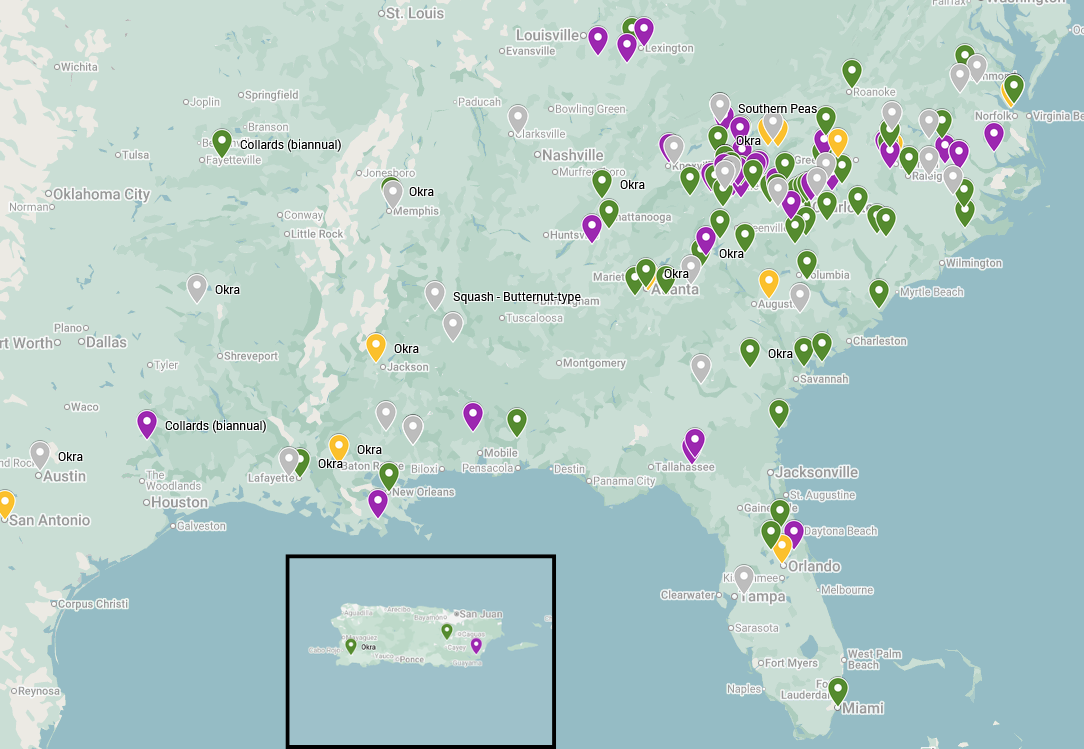
Southern
Peas

Fun Facts
Plant Family: Fabaceae
Botanical Name:Vigna unguiculata
Botanical Origin: West Africa (sub-Saharan African savanna regions)
Common Names: Southern Pea, Cowpea, Black-Eyed Pea, Crowder Pea, Field Pea, and Stock Pea (United States); Ewa, Adalu, and Njahi (West Africa); and Niébé (Senegal and French-speaking West Africa).
Edible Parts: Southern Peas are commonly harvested for their dry seeds, though the immature pods can be cooked much like green beans, mature green pods can be shelled as shelly peas, and young tender leaves are a nutritious green.
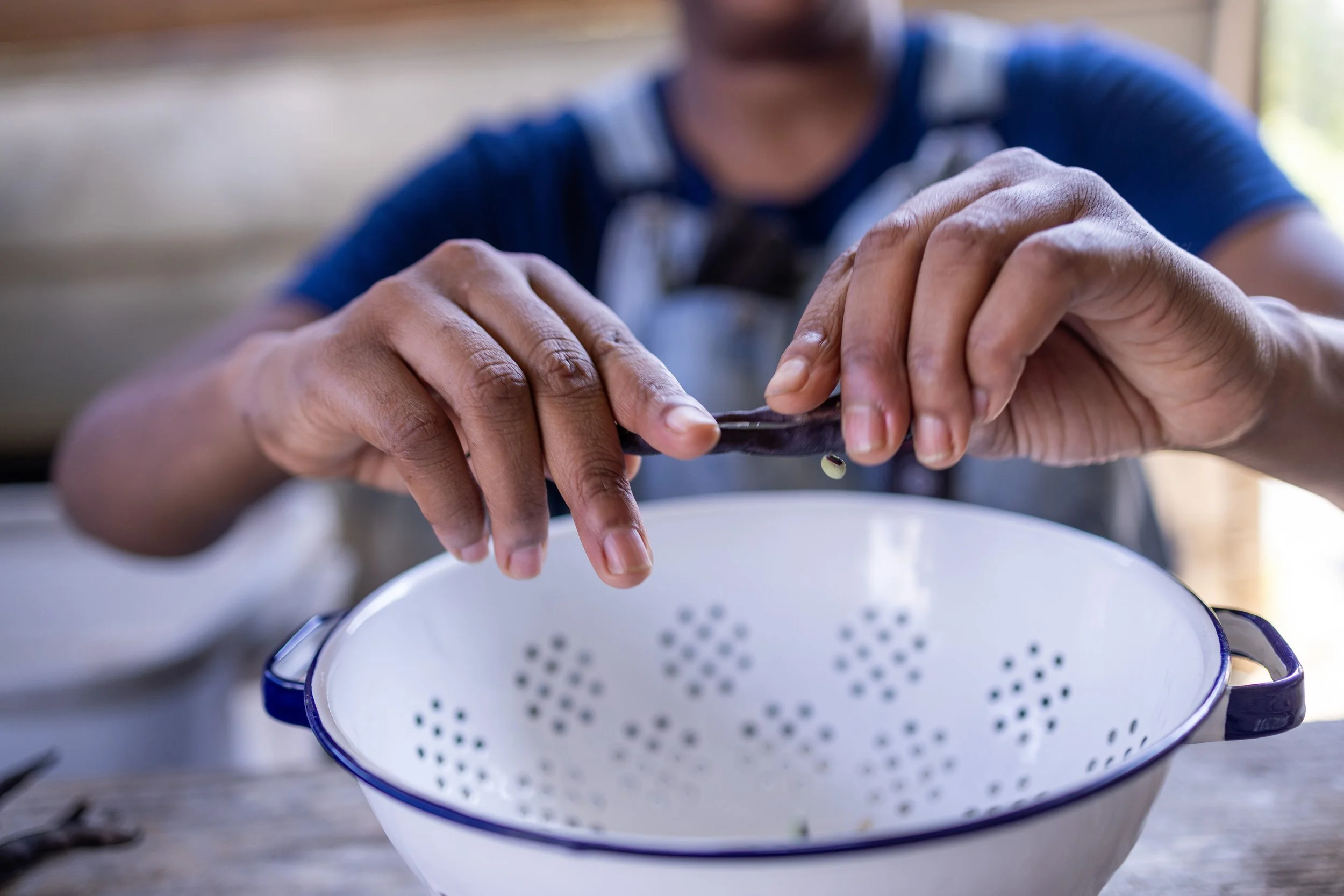
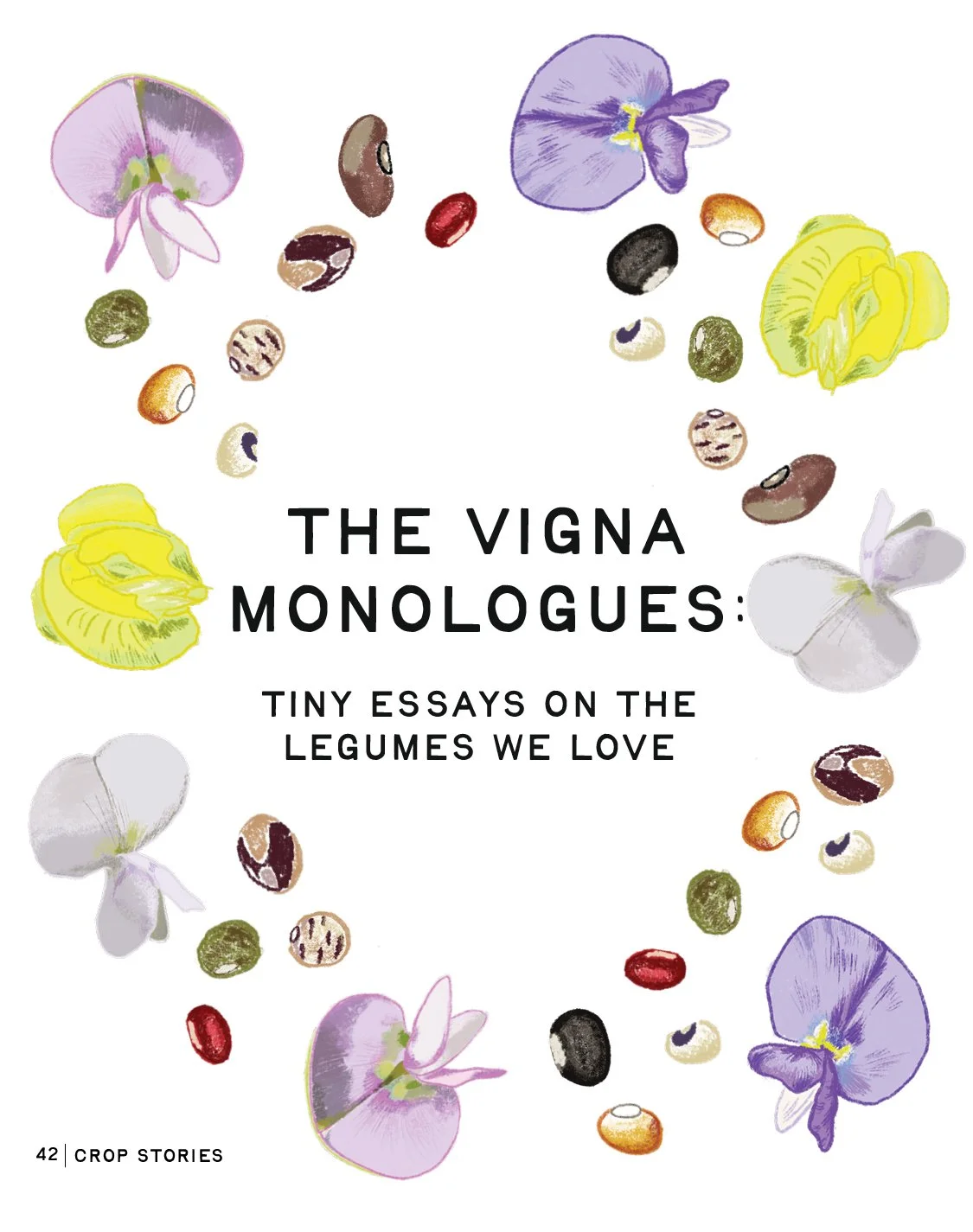
Southern Peas are legumes that we love. One of the big reasons is that they don’t suffer from the same levels of insect pressure as the common bean. And even though the common bean seems to get more attention for its bean diversity, the southern pea has plenty to show off. We love exploring all the different varieties, from the smallest delicate lady peas, to the larger field peas and crowders.
Southern peas are part of the Vigna genus, a collection of very drought-tolerant and heat-loving legumes. They don’t like our cooler early springtime soils, but once it warms up a little, they are hard to stop!
The greens are a really nutrient-dense summer offering, sadly proven so by our local deeer population’s extreme preference for them!